Embark on a journey to master the art of self-introduction in American Sign Language. This comprehensive guide will equip you with the essential knowledge and practical techniques to confidently present yourself in ASL, fostering meaningful connections within the Deaf community.
We will delve into the fundamental components of a successful ASL introduction, covering everything from the importance of non-manual markers like facial expressions and body language to the specific signs for common greetings and personal information. You’ll learn how to craft a personalized introduction, including effective finger-spelling methods and the nuances of expressing pleasantries. Furthermore, we will explore how to share details about your origin, profession, and interests, alongside the polite way to inquire about others’ names.
Understanding ASL etiquette and cultural considerations is paramount, ensuring your interactions are respectful and well-received. Finally, we will provide descriptive scenarios to help you visualize and practice these introductions in various settings, solidifying your learning through practical application.
Understanding the Basics of ASL Introductions
An ASL introduction is more than just signing a few words; it’s a complete communication that involves visual cues and a respectful exchange. Mastering these foundational elements will set you up for successful and meaningful interactions within the Deaf community.The core of any ASL introduction relies on conveying essential information clearly and engagingly. This includes identifying yourself, expressing politeness, and establishing a connection with the person you are meeting.
Fundamental Components of a Basic ASL Introduction
A basic ASL introduction typically consists of several key components that work together to form a complete greeting. These components ensure that you are understood and that your intention to communicate is clear.
- Greeting: Initiating the interaction with a friendly sign like HELLO.
- Identification: Clearly stating your name using the NAME sign.
- Politeness: Expressing a positive sentiment, such as NICE-MEET-YOU.
- Follow-up: Often, an introduction might include asking for the other person’s name, facilitating a reciprocal exchange.
The Importance of Facial Expressions and Body Language in ASL Greetings
In American Sign Language, facial expressions and body language are not merely supplementary; they are integral to the grammar and meaning of the signs themselves. They convey emotion, tone, and even grammatical information.Facial expressions can indicate the intensity of a greeting, express friendliness, or show curiosity. A warm smile and engaged eyes make your introduction welcoming. Similarly, your posture and the way you orient your body contribute to the overall message.
Facing the person directly and maintaining an open posture signals attentiveness and respect.
Common ASL Signs Used for Introducing Oneself
Several fundamental signs are essential for constructing a basic ASL introduction. Practicing these will build your confidence and fluency.
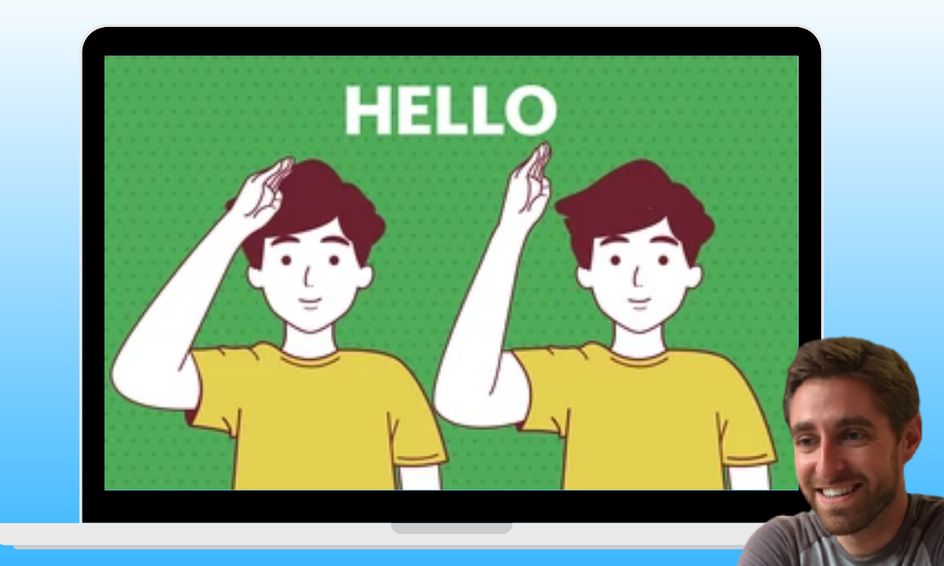
- HELLO: A common and versatile greeting. The sign is typically made with an open hand, palm facing forward, moving from the forehead outward in a salute-like motion.
- NAME: This sign is used to ask or state one’s name. It is formed by crossing the index fingers of both hands, making an “X” shape, and then tapping them together twice.
- NICE-MEET-YOU: This conveys politeness and positive regard upon meeting someone. It is often signed by bringing the flat hands together, palms facing each other, and then separating them slightly as if opening a book, followed by a nod.
- YOUR: Used to inquire about the other person’s name. The sign is made with an open hand, palm facing forward, pointing towards the person you are addressing.
Guidance on Appropriate Eye Contact and Spatial Awareness When Signing an Introduction
Effective communication in ASL, especially during an introduction, relies heavily on visual cues, making eye contact and spatial awareness crucial.Maintaining appropriate eye contact is vital. It demonstrates that you are engaged, paying attention, and showing respect to the person you are communicating with. In ASL, direct eye contact is expected and signifies active listening and participation in the conversation.Spatial awareness involves understanding the space between you and the person you are signing with.
Ensure you are positioned so that your signs are clearly visible. Avoid being too close, which can feel intrusive, or too far away, which can make your signs difficult to see. The optimal distance allows for clear visibility of your hands, face, and upper body. When signing, your signs should generally be performed within your “signing space,” which is the area in front of your body from your shoulders to your waist.
Crafting Your Personal ASL Introduction
Creating a personalized ASL introduction allows you to share who you are in a way that is both authentic and clear. This section will guide you through the essential steps to build your own introduction, from signing your name to expressing pleasantries, ensuring a smooth and natural flow.Understanding how to effectively present yourself in ASL is a foundational skill. By breaking down the process into manageable steps, you can build confidence and create an introduction that leaves a positive impression.
Signing Your Name: Finger-Spelling Techniques
Finger-spelling is a crucial component of ASL, particularly for introducing yourself. It involves using specific handshapes to represent each letter of the alphabet. While there’s a standard ASL alphabet, common techniques and considerations can make your signing more fluid and understandable.When finger-spelling your name, clarity is paramount. Ensure your hand movements are deliberate and that each letter is distinct. For common names, you might develop personal variations that are quicker to sign once mastered, but it’s best to start with the standard alphabet.Here are some general guidelines for effective finger-spelling:
- Maintain a consistent hand position, typically in front of your body.
- Keep your fingers relatively straight and avoid excessive tension.
- Move your hand smoothly from one letter to the next.
- If a letter is repeated consecutively, you can often “bounce” your hand slightly or move it a short distance to indicate the repetition without re-forming the entire letter. For example, in “ANNA,” you might sign the second ‘N’ by slightly moving your hand from the first ‘N’.
- Be mindful of your audience; if they are new to ASL, speak slower and ensure your movements are clear.
Expressing Pleasantries in ASL
Beyond your name, conveying warmth and politeness is essential in any introduction. ASL offers several ways to express “nice to meet you” and other friendly sentiments, each with slight variations in nuance.The most common way to sign “nice to meet you” involves a combination of signs. The sign for “NICE” is typically made with the dominant hand forming a flat shape and moving it across the non-dominant palm.
The sign for “MEET” involves bringing the index fingers of both hands together. When combined, “NICE MEET YOU” conveys the sentiment effectively.Other pleasantries can also be incorporated:
- “GOOD TO MEET YOU”: This uses the sign for “GOOD” (dominant hand opening and closing near the chin) followed by “MEET YOU.”
- “HAPPY MEET YOU”: This uses the sign for “HAPPY” (fingers brushing upwards on the chest) followed by “MEET YOU.”
- A simple nod and a smile can also convey friendliness, especially when combined with other signs.
Sequencing for a Complete ASL Introduction
A well-structured ASL introduction flows naturally, moving from essential information to friendly expressions. The order of signs can influence the overall impact and clarity of your introduction.A typical and effective sequence for a personal ASL introduction is as follows:
- Greeting: Start with a friendly sign like “HELLO” or “HI.” This sets a positive tone.
- Your Name: Sign your name using finger-spelling. For example, if your name is “ALEX,” you would finger-spell A-L-E-X.
- “Nice to Meet You”: Follow your name with the sign for “NICE MEET YOU.”
- Optional: “From [Location]”: If relevant, you can add your origin. For instance, “FROM” (dominant hand moves away from the non-dominant palm) followed by the sign for your city or state.
- Optional: “I [Verb]”: You might add a brief statement about yourself, such as “I LEARN ASL” (sign “I” then “LEARN” then “ASL”).
Let’s illustrate with an example for someone named “SARAH” from “NEW YORK”:
HELLO (wave or nod)
- SARAH (finger-spelled S-A-R-A-H)
- NICE MEET YOU – FROM (sign for FROM)
- NEW YORK (specific ASL signs for NEW and YORK).
This structured approach ensures all key elements are covered in a logical and easy-to-follow manner, making your introduction both informative and welcoming.
Incorporating Additional Information in Introductions
Once you have established the fundamental elements of your ASL introduction, you can enrich it by sharing more about yourself. This allows for deeper connections and more engaging conversations with others. The following sections detail how to effectively incorporate details about your origin, profession, hobbies, and how to inquire about someone else’s name.
Conveying Origin or Location
Sharing where you are from is a common and helpful piece of information to include in an introduction. In ASL, this is typically done by stating the name of the place and then clarifying if it’s a city, state, or country.
- City and State: For cities and states, you will often sign the name of the city, followed by the sign for STATE (which can vary slightly but often involves an open 8 handshape moving horizontally), and then the sign for the state’s initial. For example, to say “I am from Seattle, Washington,” you would sign SEATTLE, then STATE, then W.
- Country: When indicating a country, you will sign the country’s name. Many countries have established signs. For instance, the sign for UNITED STATES involves forming a fist with your dominant hand and circling it counter-clockwise over your non-dominant open palm.
- Clarification: If the sign for a place might be ambiguous or if you are introducing yourself to someone unfamiliar with the area, you can add clarifying signs. For example, after signing a city name, you might sign CITY.
Sharing Profession or Occupation
Your profession is a significant aspect of your identity and a great way to find common ground with others. ASL has specific signs for a wide variety of jobs and fields.
- General Approach: The typical structure for stating your profession is to sign the sign for WORK or PROFESSION, followed by the sign for your specific job. For example, to say “I am a teacher,” you would sign WORK, then TEACHER.
- Common Professions: Many common professions have well-established signs. For instance, the sign for DOCTOR involves tapping your index finger and thumb together on your chest, similar to a stethoscope. The sign for ENGINEER often involves a sweeping motion with your hand.
- Describing Your Role: If your job title is not commonly known or doesn’t have a specific sign, you can describe what you do. This might involve signing the general concept of your work and then using descriptive signs to explain your responsibilities. For example, for a software developer, you might sign COMPUTER and then DEVELOP or CREATE.
Indicating Hobbies or Interests
Sharing your hobbies and interests opens up opportunities for conversation and connection. ASL provides ways to express a wide range of activities.
- General Sign for Hobby/Interest: The sign for INTEREST or HOBBY often involves a circular motion with your index finger near your temple.
- Specific Hobbies: Many hobbies have specific signs. For example, the sign for READING involves tapping your thumb and index finger together repeatedly as if turning pages. The sign for COOKING might involve a stirring motion.
- Describing Activities: Similar to professions, if a specific sign doesn’t exist for your hobby, you can describe it. For instance, if you enjoy hiking, you might sign MOUNTAIN and then WALK or CLIMB. If you are interested in photography, you might sign CAMERA and then TAKE PICTURE.
Politely Asking for Someone’s Name
When you are introduced to someone, it is polite to ask for their name. In ASL, this is done with a clear and respectful gesture.
The most common and polite way to ask “What is your name?” is by signing NAME, followed by a questioning facial expression and a slight head tilt.
- Sign for NAME: The sign for NAME involves tapping your index fingers together twice, as if writing in the air.
- Questioning Facial Expression: This is crucial in ASL for conveying a question. It typically includes raised eyebrows and a slight furrowing of the brow.
- Context: You would typically sign this after you have introduced yourself and are waiting for the other person to share their name.
ASL Introduction Etiquette and Cultural Nuances

Navigating introductions in any language involves understanding unspoken rules and cultural expectations. In the Deaf community, ASL introductions carry specific etiquette that fosters respect, inclusivity, and connection. Being mindful of these nuances will significantly enhance your interactions.Understanding and practicing ASL introduction etiquette demonstrates your genuine interest and respect for Deaf culture. It goes beyond simply knowing the signs; it’s about embodying the principles of clear communication and mutual consideration that are central to ASL interactions.
Turn-Taking and Allowing Response Time
In ASL conversations, much like spoken language, turn-taking is crucial. After you deliver your introduction, it is essential to pause and allow the other person ample time to process your information and formulate their own response. This period of silence is not awkward; it is a space for acknowledgment and preparation.When introducing yourself in ASL, remember that visual communication often requires a moment longer for comprehension and response compared to auditory processing.
- Observe Body Language: Pay attention to the other person’s facial expressions and body language to gauge when they are ready to respond.
- Avoid Interrupting: Refrain from immediately launching into further conversation or asking another question before they have finished their introduction or response.
- Patient Observation: Cultivate patience. The visual nature of ASL means that a brief pause is natural and expected.
Cultural Considerations with Deaf Individuals
Interacting with Deaf individuals involves an appreciation for their unique cultural experiences and communication preferences. Respecting these can lead to more meaningful and positive connections. Deaf culture is rich and diverse, and understanding its norms is key to effective communication.It is important to approach interactions with an open mind and a willingness to learn. The Deaf community often values directness and clarity in communication.
- Deaf is not a disability: Many Deaf individuals identify as members of a linguistic and cultural minority, not as individuals with a disability.
- Visual Communication Preference: ASL is their primary language. When possible, try to use ASL or at least be mindful of visual communication cues.
- Respect for Personal Space: While physical touch can be a way to get attention in some cultures, be mindful of personal space in ASL interactions unless a clear connection has been established.
- “Hearing” vs. “Deaf”: Terms like “hearing person” are generally accepted when referring to someone who is not Deaf.
Signs for Gratitude and Acknowledgment
Expressing gratitude and acknowledging a connection are fundamental aspects of building rapport. ASL offers specific signs that can effectively convey these sentiments, reinforcing a positive interaction. These signs add a layer of warmth and sincerity to your communication.Using these signs demonstrates your appreciation for the interaction and the person you are communicating with.
- THANK YOU: This is a universally understood sign of gratitude. It is typically performed by bringing the fingertips of your dominant hand to your chin and moving your hand forward and slightly down.
- NICE MEET YOU: This sign expresses pleasure in meeting someone. It is often performed by bringing your open hands together, palms facing each other, and then separating them slightly as you move them apart.
- GOOD: A simple sign that can be used to acknowledge something positive about the introduction or the person. It is performed with a flat, open hand moving downwards.
- CONNECT: This sign can be used to express a feeling of connection or understanding. It is often shown by bringing two index fingers together, symbolizing a link.
Practicing and Refining Your ASL Introduction
The journey of mastering an ASL introduction, like any skill, requires consistent practice and refinement. Regularly engaging with the language and seeking feedback will help you become more fluent and confident. The more you practice, the more natural and comfortable your introductions will become.Developing a strong ASL introduction is an ongoing process.
- Record Yourself: Video recording your practice sessions allows you to review your signing, facial expressions, and overall presentation.
- Practice with Native Signers: If possible, practice with Deaf individuals or fluent ASL users. They can offer invaluable feedback and guidance.
- Seek Feedback: Don’t be afraid to ask for constructive criticism. Honest feedback is crucial for improvement.
- Focus on Clarity and Flow: Ensure your signs are clear, your movements are precise, and your introduction flows smoothly from one piece of information to the next.
- Incorporate Facial Expressions: Remember that facial expressions are an integral part of ASL grammar and convey emotion and tone.
- Role-Playing: Practice introducing yourself in various scenarios, as if you were meeting different types of people.
Visualizing ASL Introductions: Descriptive Scenarios
Understanding how ASL introductions are performed in various real-life situations can greatly enhance your learning experience. By visualizing these interactions, you can better grasp the flow, the specific signs used, and the importance of non-manual markers. This section provides detailed scenarios to illustrate these concepts in different contexts.
First-Time Meeting at a Community Event
Imagine attending a local ASL club’s monthly gathering. You spot someone new, and you decide to approach them. You walk over with a friendly smile, making eye contact.The exchange might look like this:* You: Sign “HELLO” with a gentle wave, then point to yourself and sign “MY NAME” followed by your name signs (e.g., a “J” shape moving across your chin for “John”).
You then sign “YOU” (pointing to them) and make a questioning gesture with your eyebrows raised, indicating “YOUR NAME?”
Them
They respond with a smile, sign “HELLO” back, point to themselves, and sign their name.
You
Nod, then sign “NICE MEET YOU” (fingers of dominant hand brushing against the palm of non-dominant hand, then bringing hands together in a handshake motion).
Them
They sign “NICE MEET YOU” as well.
You
You might then ask, “YOU LIVE HERE?” (pointing to them, then signing “LIVE” with closed fists moving down, and a questioning look).
Them
They might sign “YES” or “NO” and perhaps elaborate with signs like “I LIVE [city name]” or “I VISIT.”Throughout this interaction, facial expressions are crucial. A friendly smile, raised eyebrows for questions, and a nod of understanding convey politeness and engagement.
Introduction in a Classroom Setting
In an ASL class, introductions are often a structured part of learning. During the first day, the instructor might guide students through introductions.Consider this scenario:* Instructor: “Today, we will introduce ourselves. First, sign your name. Then, share one thing you are learning in ASL.”
Student A
Stands up, smiles, signs “HELLO,” then signs their name. They then sign “I LEARN ASL” (dominant hand with “L” shape moving from shoulder to elbow) and perhaps add “I LEARN [specific sign like ‘FAMILY’].” Their facial expression is attentive and eager.
Student B
After Student A finishes, Student B steps forward. They sign “HELLO,” their name, and then “I LEARN ASL.” They might add, “I LEARN [another sign, e.g., ‘COLOR’] BECAUSE [reason, e.g., ‘I LIKE ART’].” Their head might tilt slightly as they sign “BECAUSE,” and their eyes are focused on the instructor and classmates.
Instructor
Nods and might sign “GOOD” or “GREAT JOB” with a thumbs-up and a smile after each student.The classroom environment encourages clear articulation of signs and the use of appropriate non-manual markers to convey the meaning of the sentence, such as the head tilt for “because” or the raised eyebrows for questions.
Meeting Someone at a Social Gathering
Picture yourself at a Deaf social event, perhaps a birthday party. You see someone you haven’t met before, and they approach you.The flow of the conversation might be:* Them: Approaches with a relaxed smile and signs “HI.” They then sign “MY NAME” followed by their name. They might then gesture broadly and sign “YOU?” with a questioning look.
You
Respond with “HI,” sign your name, and then sign “NICE MEET YOU.” You might then ask, “HOW YOU KNOW [host’s name]?” (using a pointing gesture towards the host and signing “KNOW” with index fingers meeting).
Them
Might sign, “I FRIEND OF [host’s name] LONG TIME.” (signing “FRIEND” with two index fingers hooking together, and then “LONG TIME” with the dominant index finger moving in a curved path). They might then inquire, “YOU?”
You
You could reply, “I WORK WITH [host’s name]” or “I LIVE NEARBY.” The conversation naturally progresses to shared interests or common acquaintances.The atmosphere here is generally more casual, allowing for more spontaneous signing and perhaps more expressive non-manual markers, like a slight shoulder shrug when indicating a general connection.
Professional Introduction in an ASL-Friendly Environment
Consider an interview for a position at a Deaf organization. The interviewer, who is Deaf, initiates the introduction.This scenario highlights professionalism and clarity:* Interviewer: Extends a hand for a firm handshake (if appropriate for the culture and context), then signs “HELLO.” They then sign “MY NAME” followed by their name, perhaps using a clear, well-defined name sign.
They might then ask, “PLEASE INTRODUCE YOURSELF” (signing “PLEASE” with a curved hand moving towards them, then “INTRODUCE” with hands moving outwards, and “YOURSELF” with a pointing gesture). Their facial expression is composed and professional, with direct eye contact.
You
Respond with a handshake, sign “HELLO,” and clearly sign your name. You then proceed with your introduction, stating your qualifications and interest in the position. For instance, you might sign, “I AM [your name]. I HAVE EXPERIENCE IN [field]” (signing “EXPERIENCE” with a hand moving in a circular motion, then “IN” with a flat hand). You maintain professional eye contact and a serious but approachable demeanor.
Interviewer
Listens attentively, nodding occasionally to show understanding. They might ask clarifying questions using signs like “EXPLAIN MORE” (signing “EXPLAIN” with an open hand moving back and forth, then “MORE” with hands coming together).In a professional setting, the signs are typically executed with precision, and non-manual markers convey professionalism, attentiveness, and respect. The pace might be slightly slower to ensure clarity and comprehension.
Structuring ASL Introduction Content for Learning
To effectively learn and practice ASL introductions, it’s crucial to have a structured approach. This involves understanding the core components, anticipating common interactions, and employing effective practice methods. The following sections provide a framework for organizing learning materials and practicing these essential communication skills.
ASL Introduction Template
A clear template is invaluable for beginners to understand the sequence and content of a basic ASL introduction. This table breaks down common elements into English phrases, their corresponding ASL signs, and important notes for accurate signing.
| English Phrase | ASL Sign | Description/Notes |
|---|---|---|
| Hello/Hi | [Sign for HELLO/HI] | A simple wave or a more formal “hello” sign. |
| My name is… | [Sign for MY NAME IS] | Combine the sign for MY with NAME and IS. Ensure clear handshape and movement. |
| [Your Name] | [Fingerspelling of your name] | Fingerspell your name clearly and deliberately. Maintain eye contact. |
| Nice to meet you | [Sign for NICE MEET YOU] | A common and polite closing to an introduction. |
Common Follow-Up Questions in ASL
After exchanging names, it’s natural to engage further. Understanding and being able to ask common follow-up questions demonstrates conversational fluency and interest. These questions are typically used to learn more about the other person’s background or interests.
- What is your name? (If you didn’t catch it or want to confirm)
- Where are you from?
- What do you do? (e.g., student, work)
- Do you know ASL?
- How long have you been learning ASL?
- What are your hobbies/interests?
Step-by-Step ASL Introduction Practice Guide
Consistent practice is key to mastering ASL introductions. This guide Artikels a method for practicing with a partner, focusing on repetition, feedback, and gradual complexity.
- Initiate the greeting: One partner starts by signing “Hello.”
- Exchange names: The other partner responds with “Hello” and then signs “My name is…” followed by fingerspelling their name. The first partner then does the same.
- Sign “Nice to meet you”: Both partners sign “Nice to meet you” after exchanging names.
- Practice follow-up questions: Take turns asking and answering common follow-up questions. Focus on clear comprehension and appropriate responses.
- Role-play scenarios: Imagine different situations (e.g., meeting at a deaf event, a class, a social gathering) and practice introductions within those contexts.
- Provide and receive feedback: Offer constructive criticism on sign clarity, facial expressions, and overall flow. Be open to receiving feedback yourself.
- Switch roles: Ensure both partners have opportunities to initiate and respond.
Self-Assessment Through Recording
Recording yourself signing your ASL introduction is a powerful tool for self-correction and improvement. It allows you to objectively review your performance, identify areas for refinement, and track your progress over time.
To record yourself:
- Set up a camera or use your phone to record a video of yourself.
- Ensure good lighting and a clear view of your signing space.
- Sign your complete ASL introduction, including greeting, name, and “Nice to meet you.”
- If practicing, include some common follow-up questions and your answers.
- Review the recording critically. Pay attention to:
- Clarity and accuracy of signs.
- Facial expressions and body language.
- Eye contact (or lack thereof).
- Pacing and flow of the introduction.
- Correctness of fingerspelling.
- Note down specific areas for improvement and practice them in subsequent recordings.
Closing Summary
By understanding the core elements, crafting your personal narrative, and adhering to cultural etiquette, you are well-prepared to make a positive and lasting first impression. This guide has provided you with the tools and insights necessary to navigate ASL introductions with grace and confidence. Remember, practice is key, and with consistent effort, your ability to connect and communicate effectively in ASL will flourish, opening doors to new friendships and opportunities.