Beginning with How to Negate a Sentence in ASL (Saying “Not” or “Don’t”), this exploration delves into the nuanced world of expressing absence and denial within American Sign Language. Understanding ASL negation is crucial for clear and effective communication, moving beyond simple word-for-word translations to grasp the visual and grammatical intricacies involved.
This guide will illuminate the fundamental concepts of negation in ASL, detailing the primary methods such as the “NOT” sign and the essential headshake. We will also explore the integral role of non-manual markers, including facial expressions and eyebrow movements, in reinforcing negative statements and discuss common misconceptions that learners may encounter. Furthermore, we will cover the specific incorporation of “don’t” and “doesn’t,” advanced techniques for complex negation, and strategies for avoiding frequent errors.
Introduction to Negation in ASL
Negation in American Sign Language (ASL) is a crucial aspect of communication, allowing signers to express the absence of something, disagreement, or denial. Unlike English, where “not” or “don’t” are typically placed before or after the verb, ASL employs a more dynamic and visually rich system to convey these negative meanings. Understanding ASL negation involves recognizing its core mechanisms and the integral role of non-manual markers.The fundamental concept of negation in ASL revolves around modifying a positive sign or statement to indicate its opposite.
This is achieved through a combination of specific handshapes, movements, and facial expressions. Mastering these elements is key to clear and accurate communication in ASL, preventing misunderstandings and ensuring your intended meaning is fully grasped by the recipient.
The Role of Non-Manual Markers in ASL Negation
Non-manual markers (NMMs), which include facial expressions, head movements, and body posture, are not mere embellishments in ASL; they are grammatical components that carry significant meaning. In the context of negation, NMMs are indispensable. They work in tandem with manual signs to definitively signal a negative.When negating a statement in ASL, specific NMMs are consistently used:
- Headshake: A side-to-side shake of the head is the most common and universally recognized NMM for negation. This movement directly contradicts the affirmation of the positive sign.
- Eyebrow Furrowing: Often, the eyebrows are furrowed downwards, adding emphasis to the negative assertion. This can be a subtle or pronounced furrow depending on the strength of the negation.
- Facial Expression: A neutral or slightly stern facial expression often accompanies negation, reinforcing the denial or absence of something. A smile, for instance, would contradict a negative statement.
These NMMs are not optional; their absence when a negative is intended would render the sign unclear or even perceived as positive. The integration of manual signs and NMMs forms a complete negative structure in ASL.
Common Misconceptions About ASL Negation
Several misunderstandings can arise when learning ASL negation, particularly for individuals accustomed to spoken languages. Addressing these misconceptions is vital for accurate ASL acquisition.It is a common misconception that ASL negation solely relies on a single sign for “not.” While there are signs that can function as negators in certain contexts, the primary method of negation involves modifying existing signs and using NMMs.
For example, simply signing “GO” and then signing “NOT” separately is less common and often less grammatically sound than using the negative NMMs with the sign “GO” to indicate “not go.”Another misunderstanding is the belief that negation is always a dramatic or exaggerated expression. While emphasis can be conveyed through stronger NMMs, standard negation is often a clear, concise, and natural part of the signing.
Over-acting can sometimes lead to misinterpretation, just as under-acting can. The key is consistency and clarity in applying the appropriate NMMs.
Primary Methods of ASL Negation
ASL, like any language, has distinct ways to express negation. Understanding these methods is crucial for accurate and nuanced communication. This section will explore the primary techniques used to convey “not” or “don’t” in ASL, focusing on the visual and gestural components that make ASL so expressive.The core of ASL negation relies on a combination of manual signs and non-manual markers (NMMs).
These elements work together to clearly indicate that a statement is negative. We will delve into the specific signs and facial expressions that form the foundation of ASL negation.
The “NOT” Sign
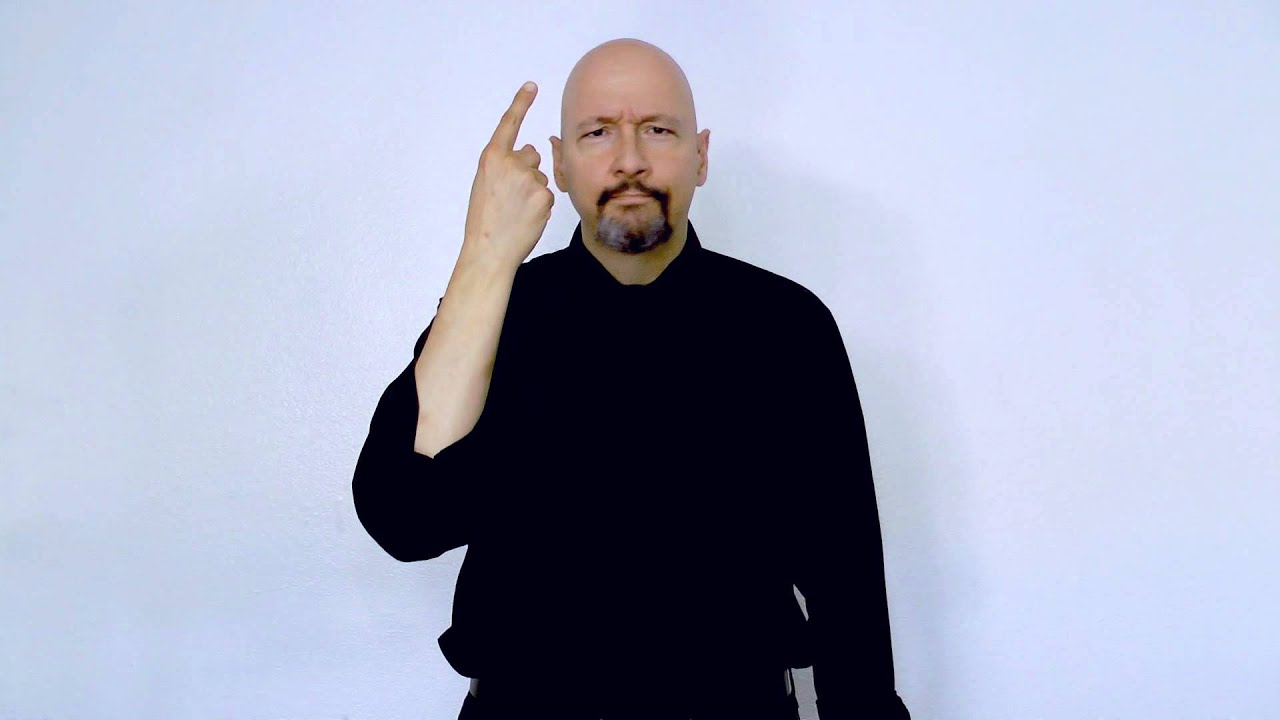
The most direct and common way to negate a sentence in ASL is by using the dedicated “NOT” sign. This sign is typically formed with the dominant hand, where the index finger points downwards. The movement can vary slightly, but it generally involves a downward motion or a sharp tap, often directed towards the concept being negated.The “NOT” sign is versatile and can be used in various contexts to modify verbs, adjectives, or entire clauses.
For instance, to say “I am not hungry,” one would sign “I” (pointing to oneself), then “HUNGRY,” followed by the “NOT” sign. The placement and intensity of the “NOT” sign can also add emphasis to the negation.
Headshake as a Non-Manual Marker
Beyond specific signs, ASL heavily utilizes non-manual markers to convey grammatical information, including negation. The headshake is a universal gesture that, in ASL, is a primary and indispensable non-manual marker for negation. This is not just a casual shake; it’s a deliberate and clear movement of the head from side to side.The headshake often accompanies the “NOT” sign or can even stand alone in certain contexts, especially when the negation is understood from the preceding statement or the overall discourse.
The speed and amplitude of the headshake can also indicate the strength of the negation. A slow, deliberate shake might convey mild disagreement, while a rapid, forceful shake emphasizes strong denial.
Facial Expressions Reinforcing Negation
Facial expressions are an integral part of ASL grammar and play a significant role in reinforcing negative statements. When negating a sentence, specific facial expressions are used to convey the negative sentiment and to provide grammatical context. These expressions are not merely decorative; they are grammatical markers that are as important as the manual signs.Common facial expressions associated with negation include:
- A furrowed brow: This often indicates a negative statement or disagreement.
- A slight frown or pursed lips: These can further emphasize the negative aspect of the statement.
- Eye gaze: The direction of the eyes can also play a role, sometimes shifting away from the person being addressed or looking downwards.
These facial cues work in tandem with the headshake and the “NOT” sign to create a comprehensive negative message. For example, signing “GO” and then shaking the head with a furrowed brow clearly communicates “DON’T GO” or “NOT GOING.”
Comparison of “NOT” Sign with Other Negation Methods
While the “NOT” sign is a primary method, ASL offers other ways to express negation, often involving the absence of a sign or a different non-manual marker. Understanding these distinctions helps in mastering the subtleties of ASL.Here’s a comparison of common negation methods:
- “NOT” Sign vs. Headshake: The “NOT” sign is a manual sign that directly translates to “not.” The headshake is a non-manual marker that often accompanies the “NOT” sign but can also function independently. In many cases, using both the “NOT” sign and the headshake provides the strongest and clearest negation.
- “NOT” Sign vs. Mouth Movement: Certain mouth movements, like a negative “uh-uh” sound or a specific facial grimace, can also indicate negation, particularly for simple yes/no questions or confirmations. However, these are generally less formal and less grammatically complex than the “NOT” sign and headshake combination.
- Absence of Sign: In some very specific contexts, negation can be implied by the absence of a positive sign or by signing the opposite. For example, if someone asks “Are you happy?” and you don’t sign “HAPPY,” it might imply you are not happy, especially if accompanied by a negative facial expression. However, this is less explicit and relies heavily on context and NMMs.
The “NOT” sign, combined with the headshake and appropriate facial expressions, forms the most robust and commonly used method for negating sentences in ASL, ensuring clarity and grammatical correctness.
Incorporating “Don’t” and “Doesn’t”
While ASL negation often relies on non-manual markers and specific signs, expressing the English concepts of “don’t” and “doesn’t” involves a direct sign that modifies verbs. This section will explore how to effectively convey these negative auxiliary verbs in ASL, ensuring clarity and grammatical accuracy. Understanding these structures is crucial for nuanced communication, allowing signers to express a wider range of negative statements.The core of negating verbs with “don’t” or “doesn’t” in ASL is achieved through a specific sign that is placed after the verb.
This approach differs from English, where the auxiliary verb precedes the main verb. In ASL, the verb is signed first, followed by the negation sign, and often accompanied by appropriate non-manual markers to reinforce the negative meaning.
Signing “DON’T” in ASL
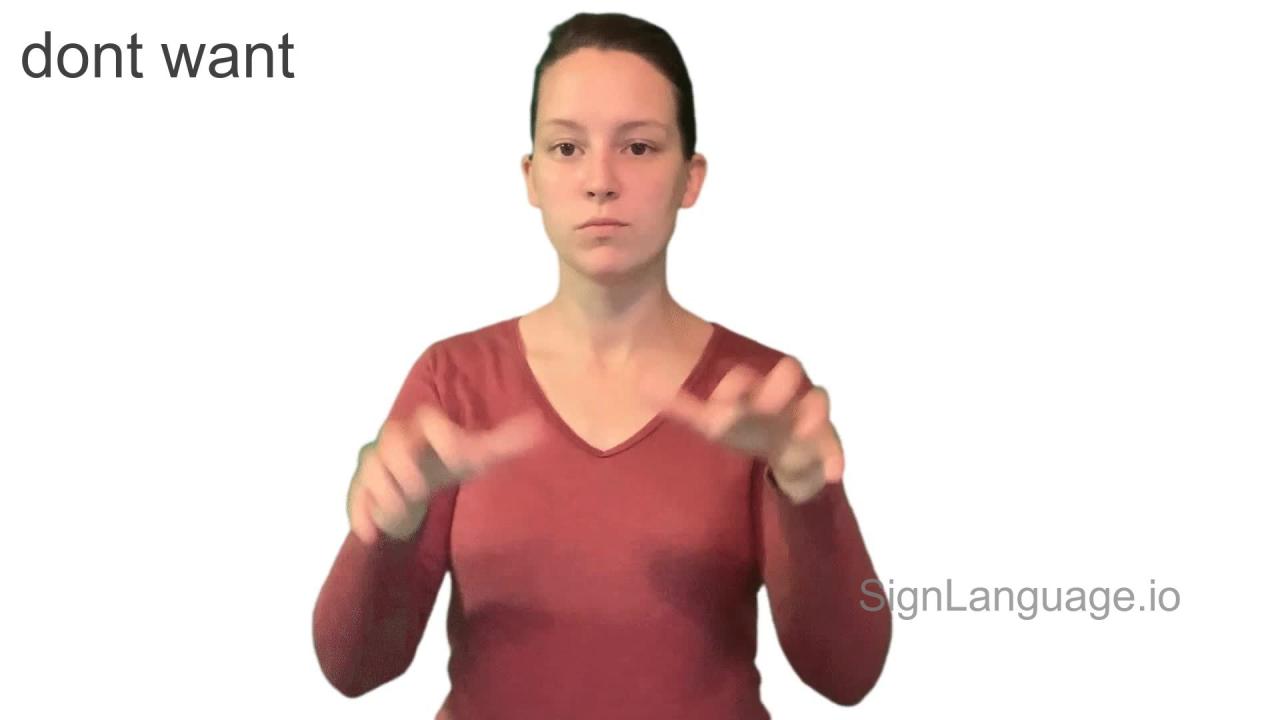
The sign for “DON’T” is a distinct movement that clearly negates the preceding action. It is typically formed with a flat hand, fingers together, and the thumb extended. The hand moves downwards in a sharp, decisive motion, often accompanied by a head shake and a furrowed brow to emphasize the negation. This sign is universally understood within the ASL community to convey the meaning of “not” or “do not” when applied to a verb.
Grammatical Structure for “Don’t” or “Doesn’t”
The grammatical structure for expressing “don’t” or “doesn’t” in ASL involves signing the main verb first, followed by the negation sign. This is a consistent pattern that applies to most verbs. The non-manual markers, such as a head shake and specific facial expressions (like a slight frown or narrowed eyes), are vital for reinforcing the negative meaning and are considered an integral part of the grammatical structure.
Verb + DON’T/DOESN’T Sign + Non-Manual Markers (e.g., head shake)
Examples of Sentences Using “Don’t” and “Doesn’t” in ASL
To illustrate the application of this structure, consider the following examples:
- To sign “I don’t eat meat,” you would first sign EAT, then DON’T, and accompany it with a head shake.
- For “She doesn’t like coffee,” the sequence would be LIKE, DON’T, with a corresponding facial expression of disapproval.
- “They don’t understand” is signed as UNDERSTAND, DON’T, again with a head shake and possibly a questioning or confused facial expression.
- “He doesn’t want to go” would be signed as WANT, GO, DON’T, with the appropriate non-manual markers.
Common Verbs Negated with “Don’t/Doesn’t”
Many common verbs can be negated using the “DON’T/DOESN’T” structure in ASL. The following list includes frequently used verbs that can be modified in this manner, demonstrating the versatility of this negation method.
Here is a list of common verbs that can be negated with the “DON’T/DOESN’T” sign:
- GO
- SEE
- KNOW
- UNDERSTAND
- LIKE
- WANT
- EAT
- DRINK
- PLAY
- WORK
- SLEEP
- TALK
- THINK
- REMEMBER
- FORGET
Negating with Other Non-Manual Markers
While the use of specific signs for negation like NOT or DON’T is fundamental, ASL’s rich system of non-manual markers (NMMs) plays an equally crucial role in conveying negative meaning. These subtle yet powerful facial expressions and body movements can independently signal negation or amplify the negation already established by a sign. Understanding these NMMs is key to achieving fluency and accurate comprehension in ASL.Non-manual markers are an integral part of ASL grammar, functioning as grammatical markers, semantic operators, and discourse organizers.
In the context of negation, they provide crucial information about the certainty, intensity, and scope of the negative statement. Mastering these elements allows for a more nuanced and sophisticated expression of “not” or “don’t.”
Eyebrow Movements for Negation
In ASL, eyebrow movements are a primary indicator of grammatical structure and meaning, including negation. For yes/no questions, eyebrows are typically raised. For wh-questions, eyebrows are typically furrowed. When negating a statement, the eyebrows generally move downwards, often with a slight furrowing. This downward movement signals that the statement is not true or is being denied.
The intensity of the downward movement can also convey the strength of the negation.
Mouth Morphemes in Negation
Mouth morphemes, also known as mouth movements or mouth shapes, are distinct configurations of the mouth that accompany signs and contribute to their meaning. For negation, specific mouth morphemes are commonly used. One prevalent mouth morpheme involves a slight tightening of the lips and a subtle “neg” or “mm-mm” sound that is not vocalized but visually represented. Another common mouth morpheme is a pursing or pressing of the lips, often accompanied by a slight shake of the head.
These mouth shapes, when combined with other NMMs and signs, reinforce the negative assertion.
Facial Configurations for Negating Statements
The overall facial configuration for negating a statement typically involves a combination of eyebrow position and mouth movement. The eyebrows are generally lowered, and the mouth may be slightly pursed or tightened, creating a serious or firm expression. A head shake, often from side to side, is also a very common and powerful NMM for negation, reinforcing the negative assertion made by the eyebrows and mouth.
It’s important to note that the specific configuration can vary slightly depending on the context and the individual signer, but the general principle of a lowered brow and a controlled mouth movement remains consistent.
Example Scenarios Illustrating Negation Through Combined Non-Manual Markers
To truly grasp the power of NMMs in ASL negation, let’s explore some illustrative scenarios. These examples demonstrate how eyebrow movements, mouth morphemes, and head shakes work in concert to convey a negative meaning, often without the explicit use of a sign for “not.”
- Scenario 1: Denying an Action
Imagine a Deaf individual is asked if they ate breakfast this morning. If they did not eat breakfast, they might sign EAT with their eyebrows lowered and a slight pursing of the lips, perhaps accompanied by a subtle head shake. The lowered eyebrows and pursed lips clearly communicate the negation of the action EAT.
- Scenario 2: Stating a Lack of Possession
If someone asks if you have a specific book, and you don’t, you might sign HAVE with your eyebrows lowered, a slight tightening of the mouth, and a head shake. The combination of these NMMs unequivocally signals that you do not possess the book.
- Scenario 3: Expressing Disagreement or Refusal
When disagreeing with a statement or refusing a request, the NMMs for negation are strongly emphasized. For instance, if someone suggests going to a place you don’t want to go, you might sign GO with a pronounced downward eyebrow movement, a firm mouth closure, and a definite head shake. This combination conveys a strong refusal.
- Scenario 4: Negating a Condition
Consider a situation where someone asks if it’s raining. If it is not raining, the signer might use the sign RAIN with lowered eyebrows and a negative mouth morpheme, potentially with a head shake. This effectively negates the condition of rain.
Advanced Negation Techniques
Beyond the foundational methods of negation, ASL offers sophisticated techniques that allow for nuanced and emphatic expressions of denial. These advanced methods involve the strategic use of non-manual markers and the clever manipulation of sentence structure to convey complex negative meanings. Mastering these techniques significantly enhances fluency and communicative precision in ASL.This section delves into the more intricate aspects of ASL negation, exploring how visual cues and structural variations contribute to a richer understanding of negative statements.
We will examine how subtle facial expressions and body movements amplify negation, how double negation can be employed for emphasis, and how questions and commands are effectively negated.
Negative Non-Manual Markers (NMMs) for Complex Negation
Non-Manual Markers (NMMs) are the silent language of ASL, conveying grammatical information and emotional nuance through facial expressions, head movements, and body posture. In negation, specific NMMs are crucial for intensifying or clarifying the negative meaning, especially in more complex sentence structures where a single sign might not suffice. These markers work in tandem with lexical signs to create a comprehensive negative message.The primary NMM for negation involves a head shake, typically from side to side.
This movement is often accompanied by specific facial expressions such as a furrowed brow and a slight pursing of the lips. The intensity and duration of the head shake and facial expression can vary to indicate the degree of negation. For instance, a slow, deliberate head shake might convey a strong refusal, while a quicker, lighter shake could indicate a simple denial.Here are some ways NMMs are integrated into complex negation:
- Emphatic Denial: A strong, sustained head shake combined with a stern facial expression and direct eye contact emphasizes a complete and unwavering denial. This is often used when someone is accused of something they did not do.
- Conditional Negation: In sentences expressing “if not,” the head shake for negation may be paired with a raised eyebrow and a slight tilt of the head, indicating a hypothetical or conditional negative scenario.
- Expressing Disagreement: Beyond a simple “no,” NMMs can convey nuanced disagreement. A slight shake of the head with a thoughtful expression might indicate polite disagreement, while a sharp shake with a frown signals strong opposition.
- Negating Abstract Concepts: For abstract ideas like “impossible” or “unlikely,” the NMMs for negation are often more pronounced, coupled with signs that visually represent the abstract concept being negated.
Double Negation in ASL
Double negation in ASL functions similarly to its spoken language counterpart, often serving to emphasize the negation rather than cancel it out. It involves the use of two negative elements within a sentence, which collectively strengthen the negative assertion. This technique is employed for rhetorical effect, to underscore certainty, or to express a particularly strong denial.The application of double negation in ASL can be observed in various contexts:
- Reinforcing a Negative Statement: Using a negative sign like NOT along with a negative NMM (e.g., a head shake) or another negative lexical sign amplifies the sense of “definitely not.” For example, signing “I NOT GO” with a head shake clearly communicates “I am definitely not going.”
- Expressing Strong Certainty: Double negation can convey a high degree of certainty about something not happening. It assures the listener that the negative outcome is absolute.
- Rhetorical Emphasis: In certain contexts, double negation can be used for rhetorical effect, drawing attention to the negated point and making it more memorable or impactful.
It is important to note that, unlike in some spoken languages where double negation can result in a positive, in ASL, it consistently reinforces the negative. The visual reinforcement of two negative markers leaves no ambiguity about the intended meaning.
Negating Questions in ASL
Negating questions in ASL involves specific strategies to inquire about the absence of something or to confirm a negative assumption. This is achieved through a combination of question-specific NMMs and negation markers. The primary goal is to ask “Is it not…?” or to seek confirmation of a negative state.The structure for negating a question typically involves the following elements:
- Negative Question Word/Sign: While ASL doesn’t have a direct equivalent to “isn’t” or “aren’t” as a single sign, the concept is conveyed through the placement of negation signs and question NMMs.
- Question NMMs: These include raised eyebrows, a forward head tilt, and sometimes a slight widening of the eyes. These are the standard NMMs for yes/no questions.
- Negation Sign: The sign NOT is often incorporated into the sentence.
Consider these examples of negating questions:
- Asking “Aren’t you going?”: You would typically sign GO (with question NMMs) and then add NOT. The raised eyebrows and forward head tilt indicate a question, and the addition of NOT transforms it into a negative question.
- Asking “Is it not true?”: This can be conveyed by signing TRUE (with question NMMs) followed by NOT, or by signing NOT-TRUE directly, again with the characteristic question NMMs.
- Seeking Confirmation of Absence: To ask “Didn’t you see it?”, one might sign SEE IT (with question NMMs) and then follow with NOT.
The interplay between the question NMMs and the negation sign is key to correctly forming and understanding negated questions in ASL.
Negating Imperative Sentences in ASL
Negating imperative sentences, or commands, involves instructing someonenot* to do something. This requires clear and direct communication, utilizing specific signs and NMMs to convey the prohibition effectively. The goal is to prevent an action from occurring.The methods for negating imperative sentences are as follows:
- Using the Sign “DON’T”: The sign DON’T, often signed with a sharp, decisive movement, is the most direct way to negate a command. It is typically placed before the verb that is being prohibited. For example, to say “Don’t touch,” you would sign DON’T TOUCH.
- Using the Sign “NOT”: Similar to its use in declarative sentences, NOT can also be used to negate imperatives. It is often placed after the verb. For instance, “Touch NOT” would convey the same meaning as “Don’t touch.”
- Employing Strong NMMs: A firm head shake, direct eye contact, and a serious facial expression are crucial when negating commands. These NMMs reinforce the seriousness of the prohibition and leave no room for misinterpretation. A stern look and a decisive head shake accompanying the sign DON’T make the command much more forceful.
- Contextual Negation: In some informal situations, the context and strong NMMs alone might suffice to convey a negative imperative. For example, a sharp “No!” gesture with a prohibitive facial expression might be understood as “Don’t do that!” without a specific verb sign.
The choice between DON’T and NOT in negating imperatives often comes down to stylistic preference and the desired emphasis. However, both are grammatically correct and clearly understood by ASL users. The accompanying NMMs are indispensable for conveying the appropriate tone and authority.
Common Errors in ASL Negation

Understanding how to negate a sentence in American Sign Language (ASL) is crucial for clear communication. While the primary methods of negation are straightforward, learners often encounter common pitfalls that can lead to misunderstandings. These errors typically stem from a lack of attention to non-manual markers, incorrect sign order, or over-reliance on English grammatical structures. Recognizing and actively working to correct these mistakes will significantly improve your fluency and accuracy in ASL negation.
Omission of Non-Manual Markers
Non-manual markers (NMMs) are an integral part of ASL grammar, conveying crucial information that cannot be expressed through manual signs alone. When negating a sentence, the omission or incorrect use of NMMs is a frequent error that can drastically alter the meaning or render the sentence ambiguous.The headshake is the most common NMM used for negation, accompanying signs like “NOT,” “DON’T,” or “CAN’T.” Without the distinct headshake, a positive statement can be mistakenly interpreted as negative, or vice versa.
For instance, signing “I GO” with a headshake clearly means “I DON’T GO.” Conversely, signing “I GO” without any negative NMMs indicates “I GO.” Other NMMs, such as furrowed brows or a stern facial expression, can also reinforce negation, especially in more complex negative constructions. Failing to incorporate these visual cues means missing a vital layer of ASL grammar, leading to misinterpretations.
Impact of Incorrect Sign Order
ASL has its own grammatical structure, which differs from English. A common error is applying English sentence structure to ASL, particularly in negation. While some negative signs can be placed at the end of a sentence (like “NOT”), many instances of negation are integrated differently.For example, in English, we say “I
do not* want coffee.” In ASL, a common way to express this would be to sign “COFFEE WANT” followed by the sign “NOT” with a headshake, or simply sign “COFFEE DON’T WANT” with the negative NMM. Another example is negating ability. English
“I
cannot* swim.” ASL
“SWIM CAN’T” with the negative NMM. Placing the “NOT” or “DON’T” sign in an unnatural position within the ASL sign order can confuse the listener. The natural flow of ASL often places the negation marker either directly before or after the verb or concept being negated, or it is incorporated through specific negative signs and NMMs. Understanding the topic-comment structure of ASL and where negation logically fits within that structure is key to avoiding this error.
Strategies for Practicing and Correcting Negation Errors
Addressing common errors in ASL negation requires consistent practice and focused attention on the specific elements that cause difficulty. Learners can implement several strategies to improve their accuracy.
- Active Observation: Pay close attention to how native ASL signers negate sentences in videos, classes, or real-life interactions. Note the specific signs used, their placement, and the accompanying non-manual markers.
- Mirror Practice: When practicing, use a mirror to observe your own non-manual markers. Ensure your headshake is clear and consistent when negating.
- Record Yourself: Video recording your signing practice allows you to review your work objectively. You can identify errors in sign choice, order, and especially NMMs that you might not notice while signing.
- Partner Feedback: Practice with ASL peers or a tutor. Ask them to specifically provide feedback on your negation. Constructive criticism from others is invaluable for identifying blind spots.
- Focus on NMMs: Dedicate practice sessions solely to mastering negative non-manual markers. Practice signing positive sentences and then re-signing them with the appropriate negative NMMs without using a separate “NOT” sign.
- Drill Sign Order: Create simple sentence structures and practice negating them in various ways, focusing on the correct placement of negation signs and NMMs according to ASL grammar.
- Use Visual Aids: Refer to ASL dictionaries and grammar resources that illustrate correct negation techniques and NMM usage.
Visualizing ASL Negation
Understanding the visual grammar of American Sign Language (ASL) is crucial for effective communication, especially when conveying negation. ASL relies on a rich interplay of handshapes, movements, locations, and non-manual markers to express meaning. This section delves into the specific visual elements that contribute to the negation of a sentence, allowing for clear and nuanced expression of “not” or “don’t.”By examining the distinct visual components of the “NOT” sign, the headshake, and accompanying facial expressions, we can gain a deeper appreciation for the dynamic and expressive nature of ASL negation.
This understanding will also help in sequencing these visual cues to form a complete negated thought.
The Visual Representation of the “NOT” Sign
The primary sign for negation, often translated as “NOT” or “DON’T,” is visually distinct and easily recognizable. Its construction involves specific handshapes, movements, and placement that collectively convey the concept of negation.The handshape for the “NOT” sign is typically a flat hand (B handshape) with the fingers held together and the thumb extended. This handshape is then moved. The movement is a short, sharp outward flick of the wrist, as if pushing something away.
The location of the sign is generally in front of the signer, often near the chest or shoulder area, depending on the emphasis or context. This outward flick from a relatively neutral starting position creates a visual cue of rejection or denial, effectively communicating negation.
Visual Characteristics of the ASL Headshake for Negation
The headshake is a fundamental non-manual marker used extensively in ASL to convey negation. Its visual characteristics, including speed and amplitude, are vital for its correct interpretation.A headshake used for negation is typically a side-to-side motion. The speed can vary, but a moderate to quick shake generally signifies a clear “no” or negation. A slow, hesitant shake might indicate uncertainty or a reluctant negation.
The amplitude, or the extent of the movement, is also important. A pronounced shake, with the head moving a noticeable distance from side to side, reinforces the negative meaning. Conversely, a subtle, almost imperceptible shake might be insufficient to clearly convey negation and could lead to misinterpretation. The headshake, when executed with appropriate speed and amplitude, acts as a powerful visual affirmation of the negative sentiment.
Facial Expressions Conveying Negative Sentiment in ASL
Beyond the specific signs and movements, facial expressions play a critical role in ASL negation by adding emotional tone and reinforcing the negative meaning. These expressions communicate a range of negative sentiments, from simple denial to stronger disapproval or disagreement.Common facial expressions used in ASL negation include:
- Furrowed Brows: Slightly furrowed eyebrows can indicate a lack of agreement or understanding, contributing to a negative interpretation.
- Tensed Lips: A slight tightening or pressing together of the lips can also convey a sense of negativity or denial.
- Slightly Pursed Lips: Similar to tensed lips, a gentle pursing of the lips can add to the negative sentiment.
- Eye-rolling (in some contexts): While not always appropriate, a subtle eye-roll can strongly convey a negative sentiment of disbelief or exasperation, depending on the social context.
- Averted Gaze: In some situations, a brief aversion of the gaze can accompany a negative response, suggesting a reluctance to engage or confirm something.
These facial cues work in conjunction with manual signs and head movements to create a comprehensive negative message.
Sequencing Visual Cues for a Negated Sentence
The order in which visual cues are presented in ASL is essential for constructing a grammatically correct and understandable negated sentence. This sequence typically involves the initial verb or concept, followed by the negation marker, often accompanied by appropriate non-manual markers.A common sequence for a negated sentence in ASL is as follows:
- Initial Verb/Concept: The sentence begins with the sign for the action or concept being negated. For example, to negate “I eat,” you would first sign EAT.
- Negation Marker: Immediately following the initial verb, the negation sign (NOT) is introduced. This can be the distinct “NOT” sign, a headshake, or other negative non-manual markers.
- Non-Manual Markers: Throughout the sentence, but particularly during the negation, facial expressions and head movements reinforce the negative sentiment. This might include a headshake during the “NOT” sign or a specific facial expression conveying disagreement.
For instance, to say “I don’t want,” the sequence would be WANT, followed by the NOT sign, with a corresponding negative facial expression and possibly a headshake. The timing and flow between these elements are critical for clarity.
Closing Summary
In conclusion, mastering ASL negation, whether through the direct “NOT” sign, the ubiquitous headshake, or the subtle yet powerful non-manual markers, unlocks a deeper level of communicative fluency. By understanding these techniques and practicing diligently, you can confidently express negative statements and engage in more sophisticated conversations in American Sign Language, ensuring your message is always clear and accurately conveyed.