Beginning with How to Differentiate Between Nouns and Verbs with One Sign, the narrative unfolds in a compelling and distinctive manner, drawing readers into a story that promises to be both engaging and uniquely memorable.
Understanding the fundamental building blocks of language, nouns and verbs, is crucial for clear communication. This guide delves into the core distinctions between these essential parts of speech, offering a straightforward method to identify them and navigate common linguistic challenges. We will explore how nouns represent entities and concepts, while verbs drive sentences by denoting actions or states of being, providing a foundational understanding for all language learners.
Understanding the Core Distinction: Nouns vs. Verbs
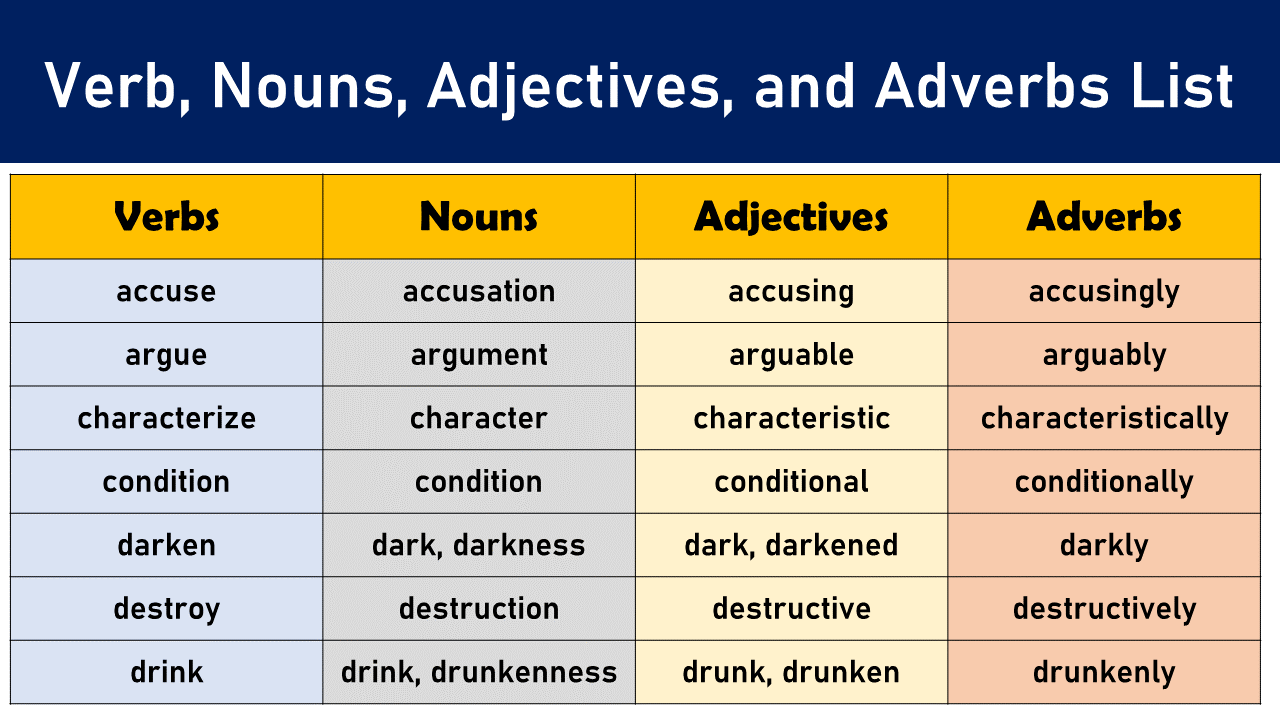
At the heart of effective communication lies a fundamental understanding of how words function within a sentence. Two of the most crucial word classes, nouns and verbs, serve as the building blocks for conveying meaning. Differentiating between them is not just an academic exercise; it’s essential for constructing clear, coherent, and grammatically sound sentences. This section will delve into the core roles and conceptual differences between these essential parts of speech.Nouns are the anchors of our language, representing the “who” and “what” of our communication.
They are words that name people, places, things, or ideas. Without nouns, our sentences would lack subjects to act or objects to be acted upon, leaving them incomplete and often nonsensical. They provide the concrete or abstract entities around which our thoughts and descriptions revolve.Verbs, on the other hand, are the engine of our sentences, driving the action or state of being.
They describe what the noun is doing or what state it is in. Verbs are indispensable for creating dynamic and meaningful expressions, as they indicate activity, occurrence, or existence. They are the vital component that brings a sentence to life.
Conceptual Differences: Actions versus Entities
The primary conceptual difference between nouns and verbs lies in their representation of static entities versus dynamic actions or states. Nouns signify entities that exist, whether tangible or intangible, while verbs signify the processes, occurrences, or conditions associated with these entities.A simple analogy to illustrate this relationship is that of a photograph and a movie. The noun is akin to the subject captured in a photograph – a person, a building, a concept.
It is a snapshot, a representation of something. The verb, however, is like the action or movement happening within a movie frame or across multiple frames. It describes what the subject in the photograph is doing, or what state it is in. For instance, in the sentence “The dog barks,” “dog” is the noun (the entity), and “barks” is the verb (the action the entity is performing).
Fundamental Role of Nouns
Nouns serve as the fundamental naming components of language. They provide the labels for everything we perceive, think about, or interact with. Their primary function is to identify and categorize.
- People: Such as
-teacher*,
-Maria*,
-child*,
-president*. - Places: Including
-city*,
-park*,
-France*,
-kitchen*. - Things: Encompassing
-book*,
-computer*,
-tree*,
-idea*. - Ideas/Concepts: Like
-happiness*,
-justice*,
-freedom*,
-theory*.
These categories demonstrate the expansive reach of nouns in naming the world around us and the abstract thoughts within us.
Primary Function of Verbs
Verbs are the action-oriented or state-describing components of sentences. Their primary function is to express what the subject does, what happens to the subject, or the condition of the subject.
- Action Verbs: These describe a physical or mental action. Examples include
-run*,
-eat*,
-think*,
-write*. - Linking Verbs: These connect the subject to a word or phrase that describes or identifies it. Common linking verbs include forms of
-to be* (is, am, are, was, were),
-become*,
-seem*,
-appear*. For example, in “She is happy,” “is” links “She” to the state “happy.” - Helping Verbs: These accompany main verbs to express tense, mood, or voice. Examples include
-will*,
-have*,
-can*,
-should*. In “They will go,” “will” helps “go.”
Verbs are crucial for conveying the dynamism and progression of events and states within a narrative or description.
The “One Sign” Method: Identifying Verbs
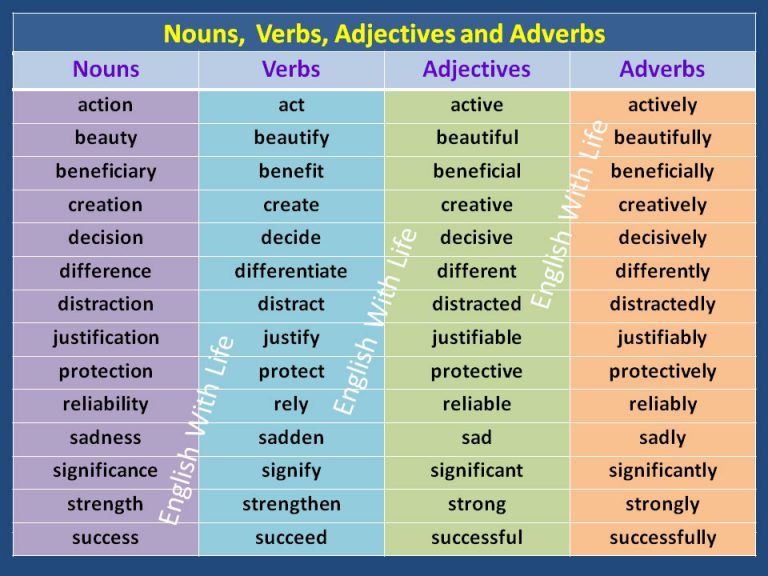
Now that we understand the fundamental difference between nouns and verbs, let’s delve into a practical method for identifying verbs. This approach, which we’ll call the “One Sign” method, focuses on the inherent nature of verbs as indicators of action or states of being. By applying a simple test, you can effectively distinguish verbs from other parts of speech.The core principle of the “One Sign” method is to determine if a word represents something that can be
- done* or a condition that
- is*. Verbs are the dynamic elements of language, describing what subjects perform or what state they are in. This makes them crucial for conveying meaning and progression in sentences.
Action or State of Being
Verbs are the words that express an action, occurrence, or state of being. If a word describes something a person, animal, or thingdoes*, it’s likely a verb. Alternatively, if it describes a condition or existence, it also functions as a verb. This dual nature is a key characteristic that helps in identification.
The Performability Test
A highly effective way to test if a word is a verb is to see if you can perform it. Ask yourself: “Can I [word]?” If the answer is yes, and the action makes sense, then the word is very likely a verb. This simple test bypasses complex grammatical rules and focuses on the practical function of the word.For instance, consider the word “run.” Can you “run”?
Yes, you can. Therefore, “run” is a verb. Similarly, with “think.” Can you “think”? Yes. “Think” is a verb.
Now, consider “table.” Can you “table”? While you can place something
on* a table, the word “table” itself, as a noun, cannot be performed in the same way.
Tense Transformations
A defining characteristic of verbs is their ability to change form to indicate when an action or state of being occurs. This is known as tense. Verbs can be modified to show past, present, and future occurrences. This flexibility in tense is a strong indicator that a word is a verb.For example, the verb “walk” can be transformed:
- Present Tense: I walk.
- Past Tense: I walked.
- Future Tense: I will walk.
This ability to shift across time is exclusive to verbs and provides a clear sign for identification.
Examples of Action Verbs
The following words primarily function as verbs, demonstrating various actions that can be performed. When you encounter these words, try applying the “performability test” to reinforce your understanding.
Consider these examples of words that signify actions:
- Jump: The athlete will jump over the hurdle. (The action of leaping.)
- Read: She likes to read books. (The action of looking at and comprehending written material.)
- Write: He needs to write a letter. (The action of forming letters or words on a surface.)
- Sing: They love to sing in the choir. (The action of producing musical sounds with the voice.)
- Eat: We will eat dinner soon. (The action of consuming food.)
- Sleep: The baby needs to sleep for ten hours. (The state of resting the body and mind.)
- Believe: I believe in your abilities. (The state of accepting something as true or real.)
The “One Sign” Method: Identifying Nouns
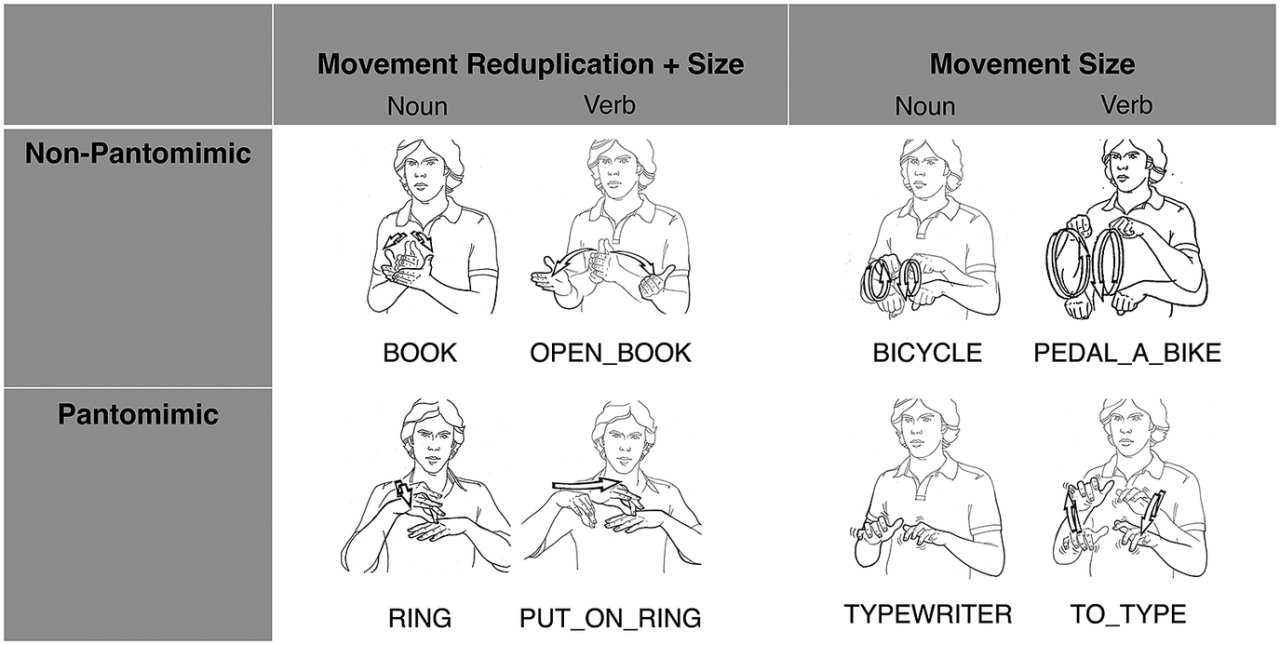
We have explored how to identify verbs using a single, reliable indicator. Now, let’s turn our attention to nouns, the building blocks of our language that represent the ‘who,’ ‘what,’ and ‘where’ of our sentences. Understanding how to pinpoint nouns is just as crucial for clear communication.Nouns are words that name a person, place, thing, or idea. They are the subjects of our thoughts and the objects of our actions.
By recognizing these core categories, we can begin to systematically identify nouns within any text.
Identifying Nouns by Category
Nouns serve to label entities in the world around us and in our minds. They can be concrete, something we can perceive with our senses, or abstract, representing concepts or feelings.
- Persons: These are words that refer to individuals. Examples include ‘teacher,’ ‘student,’ ‘doctor,’ ‘artist,’ ‘friend,’ and ‘Maria.’
- Places: These words denote locations, from vast geographical areas to specific buildings. Examples include ‘city,’ ‘country,’ ‘park,’ ‘school,’ ‘library,’ and ‘London.’
- Things: This broad category encompasses all tangible objects, both living and non-living. Examples include ‘book,’ ‘chair,’ ‘tree,’ ‘computer,’ ‘dog,’ and ‘flower.’
- Ideas: These are abstract concepts, emotions, qualities, or states of being. Examples include ‘happiness,’ ‘freedom,’ ‘justice,’ ‘knowledge,’ ‘courage,’ and ‘beauty.’
The Article Test for Nouns
A highly effective method for identifying potential nouns is to check if a word can be logically preceded by the indefinite articles “a” or “an.” This test, while not universally applicable due to exceptions, provides a strong clue.
If a word can take “a” or “an” before it, it is very likely a noun.
For instance, consider the word ‘cat.’ We can say “a cat.” Similarly, for ‘apple,’ we say “an apple.” This suggests that both ‘cat’ and ‘apple’ are nouns.However, it is important to note some exceptions. Proper nouns, which name specific people, places, or organizations, generally do not take “a” or “an” (e.g., “a John” is incorrect; we say “John”). Also, some mass nouns or abstract nouns that refer to uncountable quantities or concepts typically do not use articles in this way (e.g., “a water” or “a happiness” are usually not grammatically correct in standard usage).
Despite these exceptions, the article test remains a powerful initial diagnostic tool.
Singular and Plural Nouns
Nouns can indicate a single item or multiple items. This distinction is known as number, and nouns can be singular or plural.
- Singular Nouns: These refer to one person, place, thing, or idea. Examples include ‘car,’ ‘girl,’ ‘mountain,’ and ‘dream.’
- Plural Nouns: These refer to more than one person, place, thing, or idea. Most plural nouns are formed by adding “-s” or “-es” to the singular form (e.g., ‘cars,’ ‘girls,’ ‘mountains,’ ‘dreams’). However, there are irregular plural forms that do not follow this pattern (e.g., ‘child’ becomes ‘children,’ ‘mouse’ becomes ‘mice’).
Examples of Nouns by Type
To further solidify your understanding, here are categorized examples of words that function primarily as nouns:
| Category | Examples |
|---|---|
| Persons | singer, engineer, president, child, author |
| Places | village, stadium, continent, laboratory, island |
| Things (Concrete) | robot, planet, river, cloud, microscope |
| Things (Abstract) | wisdom, loyalty, patience, invention, memory |
| Ideas | strategy, theory, belief, ambition, satisfaction |
Common Pitfalls and Nuances
While the “one sign” method provides a strong foundation for distinguishing between nouns and verbs, language is wonderfully fluid and sometimes presents exceptions and subtle distinctions. Understanding these nuances will further refine your ability to accurately identify word classes. This section delves into those areas where the lines can blur and how to navigate them with confidence.The key to mastering these tricky cases often lies in careful observation of how a word is used within a sentence.
Context is not merely helpful; it is paramount in determining a word’s function when it exhibits dual roles.
Words with Dual Functionality: Noun and Verb
Many words in English can seamlessly transition between being a noun and a verb, depending on their role in a sentence. This duality is a common source of confusion, but by examining the sentence structure and the word’s position, we can clarify its function.Consider the word “run.” As a noun, it might refer to a period of running or a specific type of race: “She went for a morning run.” Here, “run” is a thing, a noun.
As a verb, it describes the action of moving rapidly on foot: “The children run in the park.” In this instance, “run” denotes an action. The “one sign” method can still be applied. For the noun “run,” you can often insert an article (“a run,” “the run”) or an adjective (“a long run”). For the verb “run,” you can typically conjugate it into different tenses (“ran,” “will run”).Other common examples include:
- Book: “I need to book a flight.” (Verb) vs. “This book is fascinating.” (Noun)
- Paint: “Let’s paint the room blue.” (Verb) vs. “The paint is still wet.” (Noun)
- Water: “Please water the plants.” (Verb) vs. “I need a glass of water.” (Noun)
- Dance: “They will dance all night.” (Verb) vs. “That was a beautiful dance.” (Noun)
Strategies for Differentiating Similar-Looking Words
When a word appears to be both a noun and a verb, or when its form is ambiguous, employing a few strategic checks can resolve the ambiguity. The “one sign” method, when applied thoughtfully, is your primary tool.One effective strategy is to test the word’s potential to be modified by an adjective. Nouns can typically be described by adjectives, while verbs usually cannot directly.
For example, in “a quick call,” “quick” modifies the noun “call.” You wouldn’t typically say “a quick call the phone” to describe the action of calling.Another strategy involves checking if the word can be pluralized. Most nouns can be made plural, whereas verbs generally cannot (though they can be conjugated). “Two calls were made” uses the plural noun.
You wouldn’t say “two calls the phone.”Finally, consider if the word is the subject or object of the sentence (typically nouns) or if it describes an action or state of being (typically verbs).
Abstract vs. Concrete Nouns
Nouns can be further categorized into concrete and abstract types. Understanding this distinction is important because abstract nouns, while still nouns, do not represent physical entities and therefore cannot be directly perceived by the senses.Concrete nouns refer to things that can be perceived by our five senses: sight, smell, taste, touch, and hearing. They are tangible.
Concrete nouns are those that have physical existence.
Examples include:
- Table (can be seen and touched)
- Flower (can be seen, smelled, and touched)
- Music (can be heard)
- Rain (can be seen, heard, and touched)
Abstract nouns, on the other hand, represent ideas, concepts, qualities, or states of being. They are intangible and cannot be perceived by the senses.
Abstract nouns represent concepts or qualities that lack physical form.
Examples include:
- Love (an emotion)
- Justice (a concept)
- Happiness (a state of being)
- Courage (a quality)
While both are nouns, the “one sign” method still applies. You can often place articles or adjectives before both types of nouns (“a great love,” “the abstract concept of justice”). The difference lies in their referent: physical versus non-physical.
Common Confusions: Gerunds
A particularly common area of confusion arises with gerunds. Gerunds are verb forms ending in “-ing” that function as nouns. This means they are derived from verbs but are used in sentences as subjects, objects, or complements, much like any other noun.The “one sign” method can help differentiate a gerund from a present participle (which also ends in “-ing” but functions as an adjective or part of a continuous verb tense).Consider the word “swimming.”
- As a gerund: ” Swimming is excellent exercise.” Here, “swimming” is the subject of the sentence, a noun. You could replace it with another noun like “Exercise is excellent exercise.”
- As a present participle (adjective): “The swimming pool is open.” Here, “swimming” describes the type of pool, acting as an adjective.
- As a present participle (verb tense): “She is swimming in the ocean.” Here, “swimming” is part of the present continuous verb tense, indicating an ongoing action.
To identify a gerund, check if the “-ing” word is acting as a noun. Can you replace it with a pronoun like “it” or “this”? Can it be the subject or object of the sentence? If so, it’s likely a gerund. If it describes a noun, it’s a participle acting as an adjective.
If it’s part of a verb phrase with “to be” or another auxiliary verb, it’s part of the verb.
Practical Application and Practice
Having understood the core distinction and the “one sign” method, it’s time to put this knowledge into practice. The ability to differentiate between nouns and verbs is fundamental to comprehending sentence structure and meaning. This section provides practical exercises and guides to solidify your understanding and application of these grammatical concepts.Applying the principles of identifying nouns and verbs in real sentences is crucial for mastering sentence analysis.
By actively engaging with examples and exercises, you will build confidence and accuracy in your grammatical assessments.
Sentence Analysis with Nouns and Verbs
Analyzing sentences to identify the main verb and key nouns is a fundamental skill for understanding grammatical structure. This process helps in deconstructing complex sentences into their core components, revealing the actions and the entities performing or receiving those actions.Consider the following sentences. We will identify the main verb and the key nouns within each. The main verb typically describes an action or a state of being, while key nouns are the subjects, objects, or other significant entities within the sentence.
- Sentence: The quick brown fox jumps over the lazy dog.
- Main Verb: jumps (describes the action)
- Key Nouns: fox (subject, performing the action), dog (object, being jumped over)
- Sentence: She sings beautifully in the choir.
- Main Verb: sings (describes the action)
- Key Nouns: She (pronoun acting as subject), choir (location/group)
- Sentence: The ancient book contains valuable information.
- Main Verb: contains (describes the state of being/possession)
- Key Nouns: book (subject), information (object)
- Sentence: He is a talented musician.
- Main Verb: is (linking verb, state of being)
- Key Nouns: He (pronoun acting as subject), musician (predicate nominative, describing the subject)
Classifying Words: Nouns or Verbs Exercise
This exercise is designed to test your ability to quickly classify individual words as either nouns or verbs, reinforcing the “one sign” method. Read each word carefully and determine its primary grammatical function.Please classify the following words as either a Noun or a Verb:
- Run
- Table
- Happy
- Read
- Book
- Jump
- Computer
- Write
- Student
- Think
Visualizing the Difference
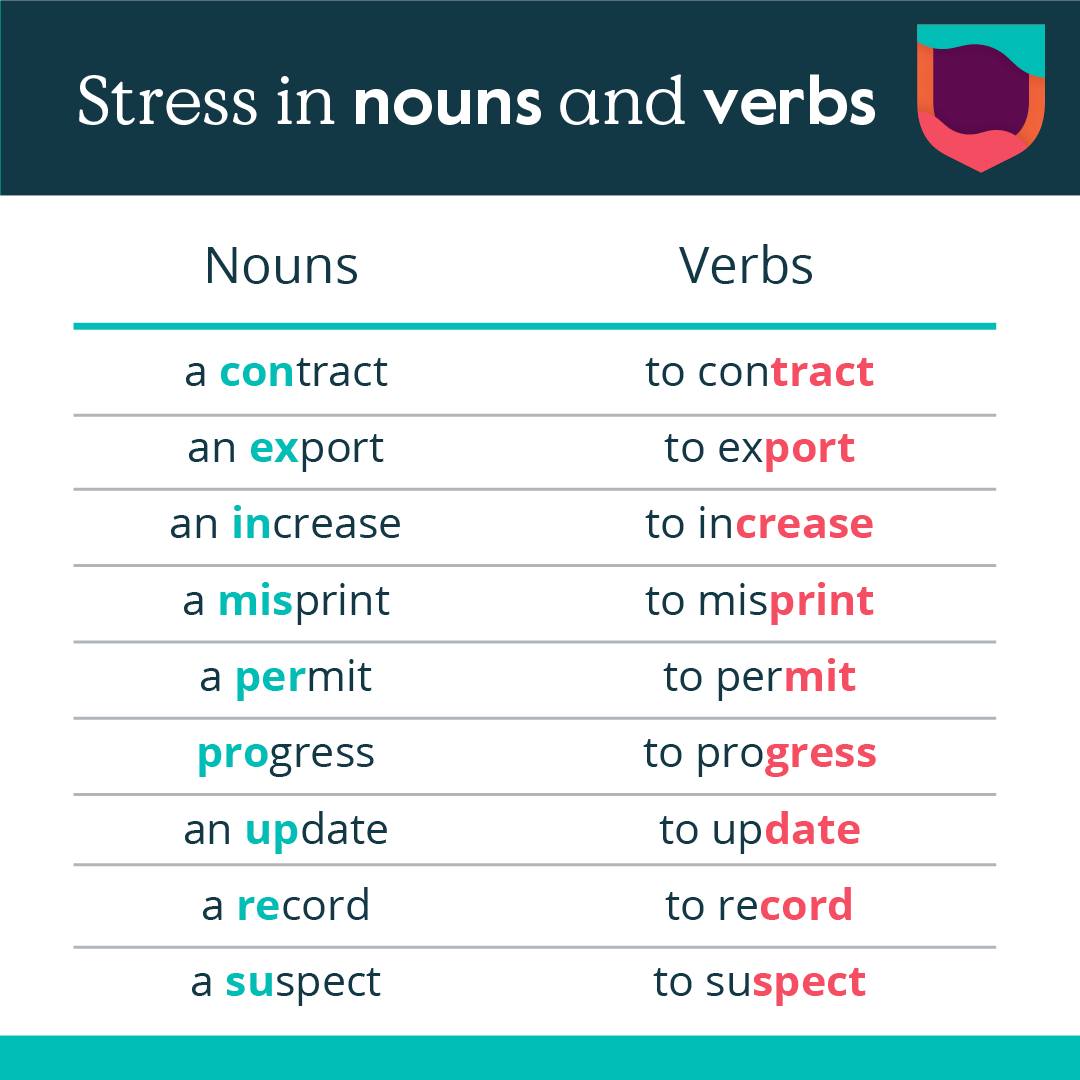
Understanding the fundamental difference between nouns and verbs can be significantly enhanced through visual representation. This section explores how imagery and conceptual diagrams can solidify this distinction, making it more intuitive and memorable. By translating abstract grammatical concepts into concrete visual elements, we can build a stronger mental framework for identifying these core sentence components.The power of visualization lies in its ability to bypass purely linguistic processing and engage our spatial and conceptual reasoning.
When we can “see” the function of a word, its role in a sentence becomes clearer. This approach is particularly beneficial for learners who find abstract rules challenging to grasp.
Action Versus Object Imagery
To visually represent the concept of an action (verb) versus an object (noun), imagine a dynamic scene. The verb is best depicted through movement, energy, and transformation. Consider an image of a person
- running*. The act of running itself is the verb – it’s what the person is
- doing*. This action can be shown with blurred limbs, a determined stride, and perhaps a trail of dust kicked up. The focus is on the process, the exertion, and the change in position.
In contrast, the noun is the entity that performs or is affected by the action. In our running example, the
- person* is the noun. This can be illustrated as a clearly defined figure, perhaps with distinct features and clothing, representing the tangible entity. Other nouns in the scene, like a
- ball* being kicked or a
- tree* being passed, would also be depicted as solid, static objects, serving as points of reference or recipients of action. The key is to contrast the fluidity and dynamism of the verb with the solidity and presence of the noun.
Illustrating States of Being
Depicting a state of being verb, such as “is,” “am,” “are,” “was,” or “were,” requires a different visual approach. Since these verbs do not represent an action, they are best illustrated by showing a condition, a quality, or an identity. For an image representing “The floweris* beautiful,” we would focus on the aesthetic qualities of the flower itself. The image would showcase vibrant colors, delicate petals, and perhaps dew drops, emphasizing its inherent beauty.
The verb “is” acts as a connector, linking the noun (“flower”) to its descriptive attribute (“beautiful”).To further illustrate this, consider an image for “The childis* happy.” This would be depicted through the child’s facial expression – a wide smile, bright eyes, and relaxed posture. The visual elements convey the internal state of the child, with the verb “is” serving to connect the subject to this emotional condition.
The emphasis is on the existence or characteristic of the noun, rather than any physical action.
Conceptual Sentence Diagram
A conceptual diagram can effectively illustrate the flow of a sentence with nouns and verbs at its core. Imagine a central pathway representing the sentence structure. At the beginning of this pathway, place a distinct icon representing a noun, perhaps a simple block or a figure. This noun is the subject, initiating the sentence’s meaning.Following this, a different icon representing a verb should be placed, perhaps a dynamic arrow or a stylized action symbol.
This verb shows what the noun is doing or what state it is in. This verb icon is crucial as it drives the sentence forward.After the verb, another icon representing a noun can appear, acting as the object or a complement. This could be another block or figure, indicating what is receiving the action or what the subject is being described as.The diagram would show arrows connecting these icons, illustrating the grammatical relationships.
A common structure might be: [Noun (Subject)] –> [Verb] –> [Noun (Object/Complement)]. This visual flow emphasizes that nouns are the entities and verbs are the actions or states that connect these entities, forming the fundamental structure of most sentences.
End of Discussion
In summary, mastering the ability to differentiate between nouns and verbs with the Artikeld “one sign” method empowers you to dissect sentences with confidence and construct your own with greater precision. By recognizing the distinct roles of actions and entities, and by applying practical tests and contextual awareness, you can effectively enhance your grasp of grammar. This foundational skill is not only essential for academic pursuits but also for all forms of effective written and spoken communication, ensuring your message is always clear and impactful.