Embarking on the journey to learn American Sign Language (ASL) today opens a world of vibrant communication and profound connection. This comprehensive guide is designed to ignite your curiosity and provide a clear roadmap for anyone eager to explore this beautiful visual language. We will delve into the compelling reasons for learning ASL, offering practical steps and essential resources to ensure your success from the very beginning.
Understanding the motivations behind learning ASL, from fostering inclusivity to unlocking new communication avenues, is the first step. This guide will then walk you through the initial actions for aspiring learners, detailing foundational elements and providing a structured approach. We will explore a variety of resources, including online platforms, mobile applications, and local learning opportunities, comparing free and paid options to suit your needs.
Understanding the Motivation to Learn ASL
Embarking on the journey to learn American Sign Language (ASL) is often driven by a rich tapestry of personal, social, and professional aspirations. Individuals are drawn to ASL for a multitude of compelling reasons, each contributing to a deeper understanding of communication and a more inclusive world. This section explores the primary motivations behind learning ASL and the profound benefits that proficiency in this visual language can bring.Acquiring ASL proficiency opens doors to enhanced communication, cultural enrichment, and expanded career opportunities.
It is a skill that fosters empathy, bridges divides, and directly contributes to creating a more accessible society for Deaf and hard-of-hearing individuals. The act of learning ASL is not merely about acquiring a new language; it is about embracing a new perspective and actively participating in a vibrant community.
Primary Reasons for Learning ASL
The decision to learn American Sign Language stems from a variety of deeply personal and impactful motivations. These reasons often reflect a desire for connection, a commitment to inclusivity, or a professional need.
- Connecting with Deaf Friends and Family: A significant motivator is the desire to communicate directly and meaningfully with Deaf loved ones, fostering stronger relationships and breaking down communication barriers within families and social circles.
- Professional Advancement: Many individuals learn ASL to enhance their career prospects in fields such as education, healthcare, social work, interpreting, and customer service, where interacting with Deaf clients or colleagues is common.
- Advocacy and Inclusivity: A strong drive to promote inclusivity and advocate for the rights and accessibility of the Deaf community leads many to learn ASL, enabling them to become allies and facilitators of communication.
- Cultural Interest: The rich and unique culture of the Deaf community, with its own history, art, and social norms, attracts many learners who are fascinated by linguistic diversity and cultural exploration.
- Cognitive Benefits: Learning a new language, especially a visual-gestural one like ASL, offers significant cognitive advantages, including improved memory, enhanced problem-solving skills, and increased creativity.
Compelling Benefits of ASL Proficiency
The benefits of becoming proficient in American Sign Language extend far beyond basic communication, enriching one’s life and contributing positively to society. These advantages span personal growth, social engagement, and professional development.
- Enhanced Communication Skills: ASL proficiency significantly broadens an individual’s communication repertoire, allowing for more nuanced and expressive interactions.
- Increased Empathy and Understanding: Learning ASL fosters a deeper understanding of different perspectives and experiences, cultivating greater empathy and compassion towards the Deaf community.
- Access to a Vibrant Community: ASL opens the door to a rich and diverse community, offering opportunities for new friendships, cultural immersion, and participation in community events.
- Career Opportunities: Proficiency in ASL is a valuable asset in numerous professions, leading to specialized roles and increased job satisfaction. For instance, a healthcare professional fluent in ASL can provide more effective and compassionate care to Deaf patients.
- Cognitive Enhancement: Studies have shown that learning sign language can improve spatial reasoning, multitasking abilities, and overall cognitive flexibility.
The Importance of ASL in Fostering Inclusivity
American Sign Language plays a pivotal role in creating a more inclusive society by ensuring that Deaf and hard-of-hearing individuals can fully participate in all aspects of life. Communication is fundamental to human connection and access to information, and ASL serves as the primary language for millions.
“Inclusivity is not about accommodating differences, but about celebrating them.”
When ASL is recognized and utilized, it dismantles communication barriers that often lead to isolation and limited opportunities for the Deaf community. This can be observed in various settings:
- Education: In educational environments, ASL ensures that Deaf students have equal access to learning, can engage fully with their peers and teachers, and achieve their academic potential. For example, schools that offer ASL as a language option or employ ASL-fluent educators create a more supportive and effective learning environment.
- Public Services: The availability of ASL interpreters and ASL-fluent staff in public services, such as hospitals, government offices, and emergency services, ensures that Deaf individuals receive critical information and assistance without delay or miscommunication.
- Social and Cultural Participation: ASL allows Deaf individuals to engage fully in social events, cultural activities, and civic life, fostering a sense of belonging and reducing marginalization. This includes access to ASL-interpreted performances, community meetings, and social gatherings.
- Workplace Accessibility: Businesses that embrace ASL create a more diverse and accessible workforce, enabling Deaf individuals to contribute their talents and skills without facing communication obstacles. This can lead to innovation and a stronger company culture.
Initial Steps for Aspiring ASL Learners
Embarking on the journey of learning American Sign Language (ASL) is an exciting and rewarding endeavor. For absolute beginners, understanding where to start can feel overwhelming. This section Artikels the fundamental first actions to take, providing a clear roadmap to begin your ASL learning experience effectively. The focus is on building a strong foundation that will support your progress as you delve deeper into this beautiful visual language.The initial stages of learning any new language are crucial for establishing good habits and a solid understanding of its core components.
For ASL, this means concentrating on the building blocks that make up its structure and communication. By taking deliberate and informed first steps, you can set yourself up for success and make the learning process more enjoyable and efficient.
Essential Foundational Elements
From the very beginning, aspiring ASL learners should prioritize mastering the fundamental elements that form the bedrock of the language. These components are not just individual signs but the very fabric of how ASL is constructed and understood. Focusing on these areas first will provide a robust framework for all subsequent learning.The foundational elements of ASL can be broadly categorized into several key areas.
Understanding and practicing these will significantly accelerate your learning curve and ensure you are building a strong and accurate understanding of the language.
The ASL Alphabet (Fingerspelling)
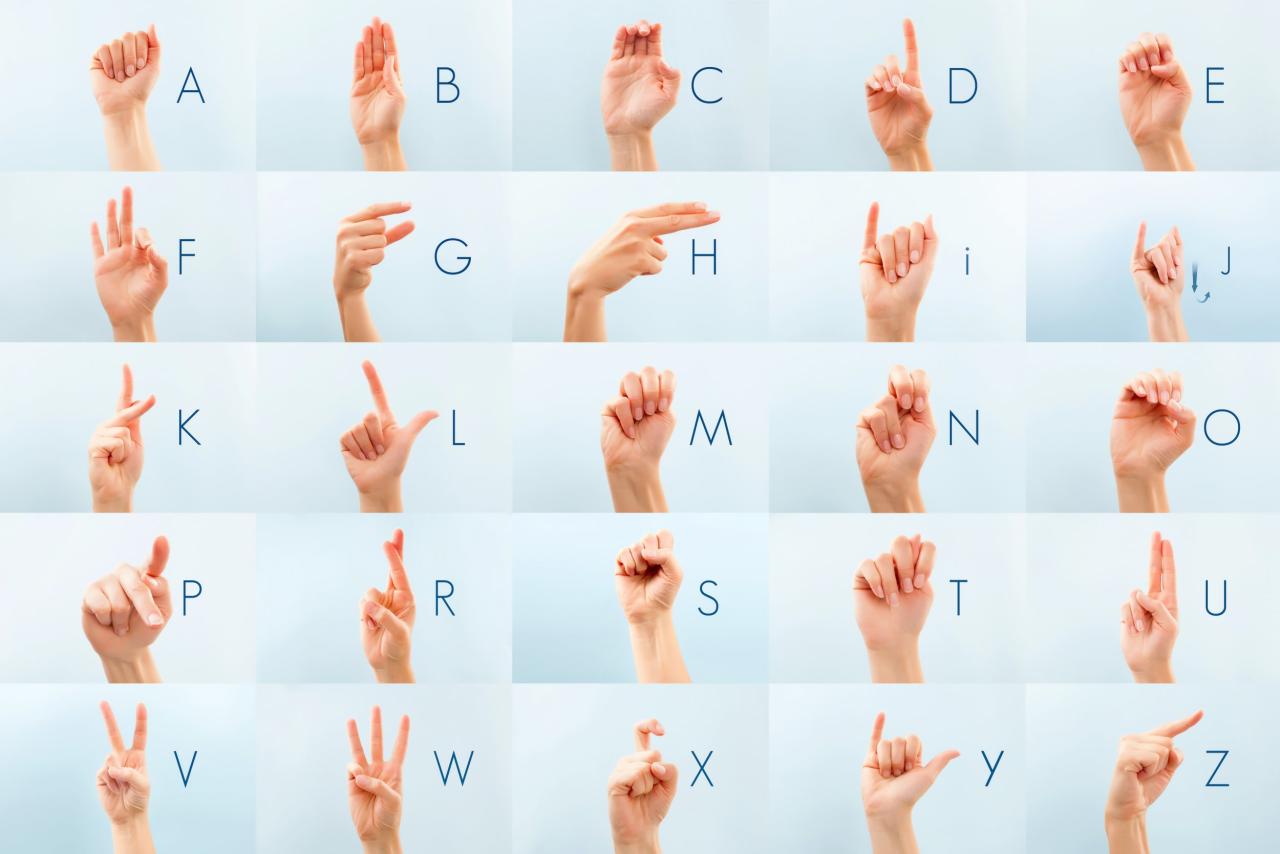
Fingerspelling is a critical component of ASL, used to represent words for which there isn’t a specific sign, proper nouns, or to clarify a sign. Mastering the manual alphabet is akin to learning the letters of a spoken language. It is essential for understanding and being understood in many contexts.
Here is a step-by-step guide to learning the ASL alphabet:
- Familiarize Yourself with Handshapes: Each letter in the ASL alphabet has a distinct handshape. Observe and practice forming each handshape accurately. Pay attention to finger placement, palm orientation, and any specific movements required.
- Learn the Letters Sequentially: Begin with the letters that are visually similar and progress to those that are more distinct. Many learners find it helpful to group letters by their handshape or movement patterns.
- Practice with Visual Resources: Utilize online videos, charts, and flashcards that demonstrate the ASL alphabet. Seeing the signs performed correctly is crucial for accurate learning.
- Practice in Isolation: Once you can form individual letter handshapes, practice spelling out your name, common words, and simple phrases.
- Develop Fluency: The goal is not just to know the letters but to be able to fingerspell smoothly and at a reasonable pace. Practice regularly to increase your speed and reduce hesitation.
For example, the letter ‘A’ is formed by making a fist with your thumb extended straight up. The letter ‘B’ is formed with your fingers held straight and together, parallel to your thumb. The letter ‘C’ is a curved handshape resembling the letter itself.
Basic ASL Vocabulary
Beyond the alphabet, learning a core set of common ASL signs is paramount. This initial vocabulary will enable you to begin constructing simple sentences and engaging in basic communication. Prioritizing high-frequency words and phrases will provide the most immediate practical benefit.
To effectively build your initial ASL vocabulary, consider the following approach:
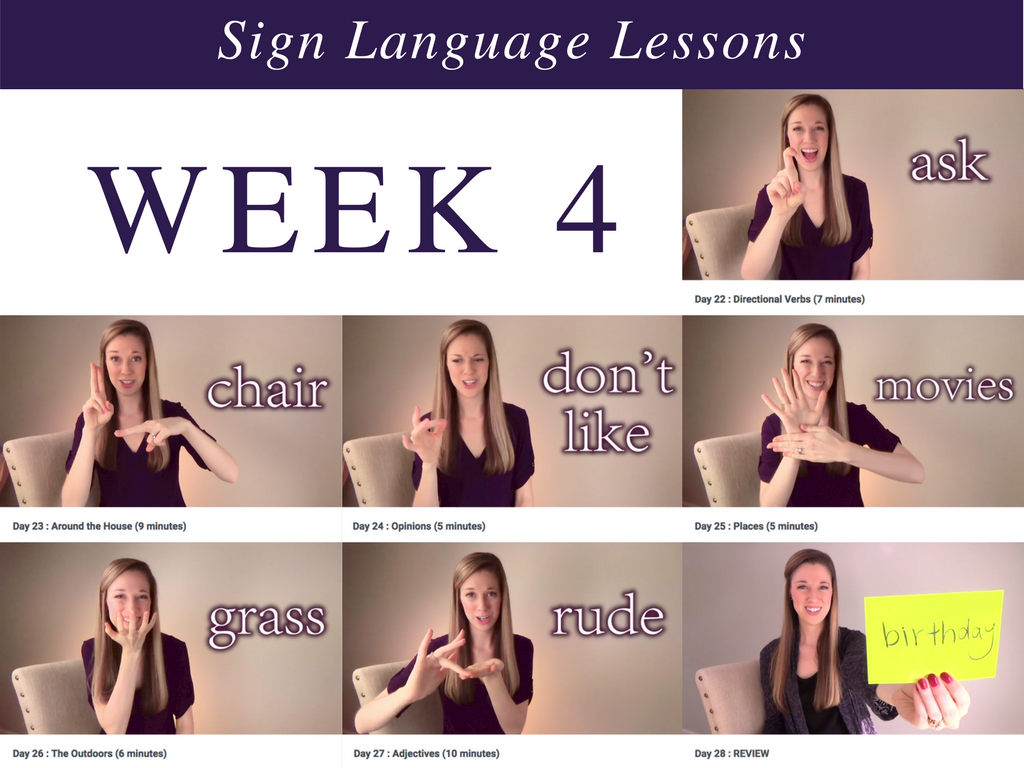
- Focus on Everyday Concepts: Begin with signs for greetings (hello, goodbye), common objects (book, chair, table), family members (mother, father, brother), emotions (happy, sad, tired), and basic actions (eat, drink, go, want).
- Learn Signs in Context: Whenever possible, learn signs within the context of a phrase or sentence. This helps in understanding their usage and nuances.
- Utilize Repetition and Association: Repeatedly practice the signs you learn. Associating signs with their English equivalents, or even better, with the actual object or action, will strengthen memory retention.
- Explore Thematic Units: Grouping vocabulary by themes (e.g., food, colors, weather) can make learning more organized and engaging.
- Use a Variety of Learning Tools: Combine visual dictionaries, online ASL courses, apps, and if available, interaction with ASL users.
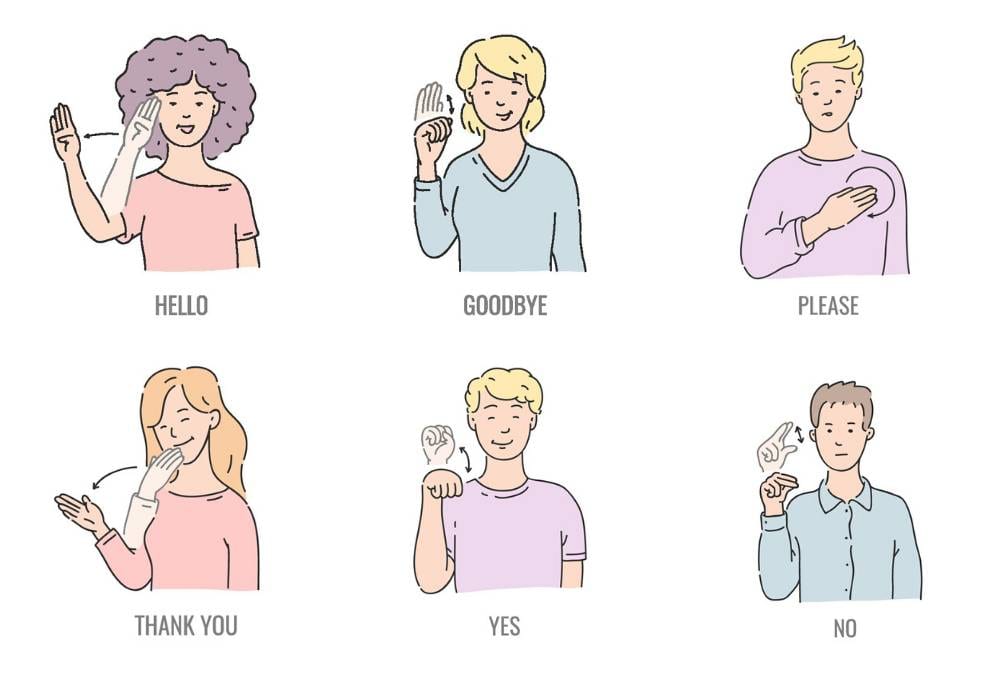
For instance, the sign for “HELLO” is typically a flat hand moving from the forehead outwards, similar to a salute. The sign for “THANK YOU” involves touching your chin with your fingertips and moving your hand forward, palm facing you.
Understanding ASL Grammar and Structure
While ASL shares vocabulary with English, its grammatical structure is distinct and visually based. Understanding these fundamental differences from the outset is crucial to avoid simply translating English word-for-word, which is ineffective in ASL.
Key aspects of ASL grammar and structure to focus on initially include:
- Non-Manual Markers (NMMs): These are facial expressions, head tilts, shoulder movements, and body posture that convey grammatical information, tone, and emotion. They are integral to ASL grammar. For example, raised eyebrows often indicate a yes/no question, while a furrowed brow signals a wh-question (who, what, where, when, why).
- Sign Order: ASL often uses a Topic-Comment structure, which differs from English’s Subject-Verb-Object. For example, instead of “I want to eat pizza,” one might sign “PIZZA I WANT EAT.”
- Use of Space: ASL utilizes the signing space (the area in front of the signer) to represent people, objects, and locations. This spatial grammar allows for efficient communication and storytelling.
- Classifiers: These are specific handshapes that represent categories of objects or beings and are used to describe their movement, location, and appearance.
A critical principle to grasp early on is that ASL is not a signed version of English. It is a distinct language with its own unique linguistic rules and conventions. Ignoring these differences can lead to misunderstandings and hinder fluency.
Finding Learning Resources
Identifying reliable and effective learning resources is a vital first step. The availability of diverse resources caters to different learning styles and preferences, making the journey more accessible.
Here are essential types of resources to seek out:
- ASL Dictionaries and Encyclopedias: These provide visual and sometimes video demonstrations of signs.
- Online Courses and Websites: Many reputable organizations and individuals offer structured ASL courses, often with video lessons and interactive exercises.
- Mobile Applications: Numerous apps are available for learning ASL vocabulary, fingerspelling, and basic phrases.
- Books and Workbooks: Traditional learning materials can offer a structured curriculum and exercises.
- Community Resources: Look for local deaf community centers, ASL classes offered by community colleges or universities, or Deaf events.
When selecting resources, prioritize those that feature clear video demonstrations by fluent ASL users, as visual accuracy is paramount in sign language learning. Websites like Signing Savvy, ASLDeafined, and the Lifeprint (ASLU) website are excellent starting points for many learners.
Engaging with the Deaf Community
Connecting with Deaf individuals and the broader Deaf community is arguably one of the most impactful steps an aspiring ASL learner can take. Direct interaction provides invaluable real-world practice, cultural insights, and authentic language exposure.
To effectively engage with the Deaf community:
- Attend Local Deaf Events: Many communities host social gatherings, workshops, or cultural events where ASL is the primary language.
- Seek Out Language Exchange Partners: Look for opportunities to practice ASL with fluent signers. This could be through formal programs or informal meetups.
- Be Respectful and Open-Minded: Approach interactions with humility and a genuine desire to learn. Understand that you are entering a community with its own rich culture and history.
- Observe and Listen: Pay close attention to how native signers communicate, their use of space, facial expressions, and the flow of conversation.
- Start Small: Begin with simple greetings and introductions. Don’t be afraid to make mistakes; most Deaf individuals are patient and encouraging to learners.
“The best way to learn a language is to immerse yourself in it and interact with its native speakers.”
This adage holds particularly true for ASL. Learning from and with the Deaf community offers an unparalleled depth of understanding that textbooks and videos alone cannot replicate.
Resources for Learning ASL
Embarking on the journey of learning American Sign Language (ASL) is an exciting endeavor, and fortunately, a wealth of resources is available to support your progress. These resources cater to various learning styles and budgets, ensuring that everyone can find a suitable path to ASL proficiency. From comprehensive online platforms to interactive mobile applications and local community classes, the tools to begin your ASL education are readily accessible.This section will guide you through the diverse landscape of ASL learning resources, highlighting effective options for both independent study and structured learning environments.
We will explore online platforms, mobile applications, methods for finding in-person instruction, and a comparative analysis of free versus paid learning materials to help you make informed decisions about your ASL learning journey.
Online Platforms and Websites for ASL
Numerous online platforms offer structured courses, video dictionaries, and interactive exercises designed to facilitate ASL acquisition. These websites often provide a foundational understanding of ASL grammar, vocabulary, and cultural nuances, making them excellent starting points for beginners.
- ASL University (Lifeprint.com): A comprehensive resource offering free video lessons, a detailed ASL dictionary, and explanations of ASL grammar and syntax. It is highly regarded for its structured approach and extensive content.
- Signing Savvy: This website provides a vast ASL dictionary with video clips of signs, a phrase builder, and tools for creating custom vocabulary lists. It’s particularly useful for expanding your vocabulary and understanding how signs are used in context.
- Hands Land: Offers a variety of ASL resources, including lessons, games, and a searchable dictionary. Their content is often geared towards making learning engaging and fun.
- Bill Vicars’ ASL Teaching Resources: Bill Vicars, a prominent ASL instructor, provides a wealth of free video lessons on YouTube and his website, covering everything from basic signs to complex grammatical structures.
Mobile Applications for ASL Acquisition
Mobile applications offer a convenient and portable way to practice ASL vocabulary and phrases on the go. Many apps incorporate interactive quizzes, flashcards, and video demonstrations, making them ideal for reinforcing learning and practicing between formal lessons.
- The ASL App: This application features a comprehensive ASL dictionary with clear video demonstrations of signs, along with quizzes and learning modules. It’s designed for learners of all levels.
- SignSchool: Offers interactive lessons, quizzes, and a large library of ASL signs. The app focuses on building vocabulary and understanding sentence structure through engaging activities.
- Lingvano ASL: This app provides a structured curriculum with video lessons and practice exercises. It often incorporates gamification elements to keep learners motivated.
- Marlee Signs: Developed by actress and ASL advocate Marlee Matlin, this app offers a user-friendly interface with a focus on practical vocabulary and everyday conversations.
Finding Local ASL Classes or Tutors
While online resources are invaluable, in-person learning can provide crucial opportunities for direct feedback, interaction with native signers, and a deeper understanding of the nuances of ASL communication. Finding local classes or tutors is an effective way to enhance your learning experience.
- Community Colleges and Universities: Many educational institutions offer ASL courses as part of their curriculum. These courses are often taught by certified instructors and provide a structured academic environment.
- Deaf Community Centers: Local centers for the Deaf often host ASL classes or can direct you to qualified instructors within the community. Engaging with the Deaf community is highly beneficial for language immersion.
- Online Directories and Local Search: Websites like Meetup.com, local community bulletin boards, and general internet searches can help identify ASL tutors or study groups in your area. Look for instructors who are fluent in ASL and have experience teaching.
- Referrals: Ask individuals who are already learning or fluent in ASL for recommendations on classes or tutors they have found effective. Word-of-mouth can be a reliable source of information.
Comparative Overview of Free Versus Paid ASL Learning Resources
Both free and paid resources offer distinct advantages for ASL learners. Understanding these differences can help you strategically allocate your learning time and budget.
Free ASL Learning Resources
Free resources are abundant and provide an excellent starting point for individuals with limited budgets or those who prefer to explore ASL at their own pace before committing financially.
- Advantages: Accessibility, no financial commitment, vast availability of basic vocabulary and introductory concepts, flexibility in learning schedule.
- Examples: Lifeprint.com, YouTube channels dedicated to ASL instruction (e.g., Bill Vicars), free sections of some mobile apps, ASL dictionaries available online.
- Limitations: May lack structured progression, limited personalized feedback, content can sometimes be less comprehensive or up-to-date compared to paid options, may require more self-discipline to stay motivated.
Paid ASL Learning Resources
Paid resources often offer more structured curricula, professional instruction, advanced content, and dedicated support, which can accelerate learning and provide a more in-depth understanding.
- Advantages: Structured curriculum, professional instructors, personalized feedback and correction, comprehensive content, advanced topics, often include community or support forums, certificates of completion.
- Examples: Comprehensive online ASL courses from institutions or dedicated platforms, premium features of mobile applications, private ASL tutoring, intensive ASL workshops.
- Limitations: Financial investment required, may be less flexible in terms of scheduling (for live classes or tutoring).
A balanced approach often involves utilizing free resources for initial exploration and vocabulary building, then investing in paid resources for more structured learning, advanced grammar, and personalized feedback as you progress.
“The best way to learn a language is to immerse yourself in it, and that immersion can be supported by a variety of excellent resources, both digital and in-person.”
Core Components of ASL Learning
Embarking on the journey of learning American Sign Language (ASL) involves mastering several fundamental elements that form the bedrock of effective communication. These components work in synergy to create a rich and nuanced language that transcends spoken words. Understanding and dedicating time to each of these areas will significantly accelerate your progress and deepen your comprehension.This section delves into the essential building blocks of ASL, providing a clear roadmap for aspiring learners to focus their efforts and build a strong foundation.
By grasping these core components, you will be well-equipped to engage in meaningful conversations and navigate the Deaf community with confidence.
The ASL Alphabet and Fingerspelling
The ASL alphabet, also known as the manual alphabet, is a crucial starting point for any ASL learner. It consists of distinct handshapes that represent each letter of the English alphabet. Fingerspelling is the process of using these handshapes to spell out words, names, places, and sometimes even concepts that do not have a specific sign. Mastering the alphabet allows you to accurately represent any word and is essential for clarifying signs or communicating when a specific sign is unknown.
It serves as a vital bridge between the written English language and the visual-gestural modality of ASL.The significance of fingerspelling extends beyond mere word representation. It is integral to:
- Spelling out proper nouns like names of people, cities, and organizations.
- Clarifying the meaning of a sign when there might be ambiguity.
- Communicating technical terms or concepts for which a common sign may not exist or be widely known.
- Engaging in initial introductions, where names are frequently spelled out.
ASL Grammar and Sentence Structure
ASL possesses its own unique grammatical structure, distinct from English. Understanding ASL grammar is paramount to constructing grammatically correct and comprehensible sentences. This involves recognizing that ASL is not simply English signed word-for-word. Key aspects of ASL grammar include:
- Topic-Comment Structure: ASL often places the topic of the sentence first, followed by the comment or description about that topic. For example, instead of “I am going to the store,” one might sign STORE I GO.
- Non-Manual Markers (NMMs): These are crucial grammatical elements conveyed through facial expressions, head movements, and body posture. They can indicate questions, negation, intensity, and the subject/object of a verb.
- Verb Agreement: Many ASL verbs incorporate movement and orientation that indicate the subject and object of the action.
- Spatial Relationships: ASL utilizes the signing space to establish and refer to locations, people, and objects, creating a visual representation of the sentence’s context.
Effective ASL communication relies heavily on the correct sequencing and integration of these grammatical features.
Facial Expressions and Body Language in ASL Communication
Facial expressions and body language are not mere embellishments in ASL; they are integral grammatical components that carry significant meaning. These non-manual markers (NMMs) convey a wealth of information, including:
- Emotional Tone: Happiness, sadness, anger, surprise, and other emotions are clearly expressed through facial expressions, adding emotional depth to signed communication.
- Grammatical Function: Specific facial movements can indicate different types of questions (yes/no, wh-questions), negation, commands, and the intensity of an action. For instance, a furrowed brow often signals a wh-question.
- Adverbial Information: The speed and manner of a sign, combined with facial expressions, can indicate adverbs like “quickly,” “slowly,” or “carefully.”
- Character or Perspective: When storytelling or role-playing, facial expressions and body shifts help to embody different characters.
Ignoring these visual cues would result in incomplete and often misunderstood communication. They are as vital to ASL as intonation and tone of voice are to spoken languages.
Common ASL Signs for Everyday Greetings and Introductions
Beginning your ASL journey with common greetings and introductions will provide immediate practical application and build confidence. These foundational signs are frequently used in everyday interactions and are essential for initial engagement with the Deaf community.Here are some fundamental signs to get you started:
- HELLO: Typically a salute-like gesture, moving your open hand from your forehead outward.
- GOOD MORNING/AFTERNOON/NIGHT: These signs combine the sign for “GOOD” with the sign for the respective time of day (e.g., sun moving across the sky for day, hand closing for night).
- HOW ARE YOU?: This is often conveyed through a combination of signs for “HOW” (fingers intertwined and moving) and “YOU” (pointing to the person). The facial expression, often a raised eyebrow, indicates a question.
- FINE/GOOD: A simple sign where your thumb touches your chin and moves outward, or a fist with the thumb extended, moving upwards.
- MY NAME IS: This involves signing “MY” (flat hand on chest) followed by fingerspelling your name.
- PLEASE: A flat hand rubbing in a circular motion on your chest.
- THANK YOU: A flat hand moving from your chin outward towards the person you are thanking.
- NICE MEET YOU: This sign combines “NICE” (one hand sliding over the palm of the other) with “MEET” (two index fingers coming together) and “YOU” (pointing).
Practicing these signs regularly will enable you to initiate conversations and make a positive first impression.
Practicing and Improving ASL Skills
Consistent practice is the cornerstone of mastering any new language, and American Sign Language (ASL) is no exception. Developing fluency requires dedicated effort, strategic engagement, and a commitment to continuous learning. This section Artikels effective methods for honing your ASL abilities, from independent practice to interactive communication and error correction.To truly internalize ASL, integrating it into your daily routine is paramount.
A structured approach to practice ensures that you are consistently exposed to and actively using the language, which accelerates your learning curve and builds confidence.
Creating a Practice Routine
A well-defined practice routine fosters consistent skill development and prevents stagnation. It allows you to systematically work on different aspects of ASL, ensuring a balanced and comprehensive learning experience.A daily or weekly schedule that allocates specific times for ASL practice is highly beneficial. This routine should incorporate various activities to keep your learning engaging and effective. Consider the following elements when structuring your practice:
- Daily Sign Review: Dedicate 10-15 minutes each day to reviewing signs learned previously. Use flashcards, online dictionaries, or apps to refresh your memory and reinforce muscle memory.
- Vocabulary Expansion: Set a goal to learn a specific number of new signs each week. Focus on thematic vocabulary relevant to your interests or daily life to make learning more practical.
- Grammar and Structure Practice: Spend time understanding and practicing ASL grammar rules, such as non-manual signals, sentence structure, and the use of space.
- Receptive Skills: Engage in activities that improve your ability to understand signed conversations. This could involve watching ASL videos, movies, or vlogs.
- Expressive Skills: Practice producing signs yourself, whether by signing along with videos or practicing in front of a mirror.
- Scheduled Conversation Practice: Allocate time for practicing with others, as discussed later in this section.
Techniques for Practicing Signing Independently
Independent practice is crucial for building confidence and refining your signing technique when direct interaction isn’t immediately available. It allows you to focus on the clarity and accuracy of your signs without external pressure.Utilizing various tools and methods can significantly enhance your independent ASL practice. These techniques help you to monitor your progress and identify areas for improvement.
- Mirror Practice: Stand in front of a mirror to observe your handshapes, movements, and facial expressions. This allows you to self-correct and ensure your signs are clear and accurate. Pay close attention to the orientation of your hands and the path of your movements.
- Video Recording: Record yourself signing and then review the footage. This is an excellent way to catch errors in signing that you might not notice in real-time. Compare your signing to that of native ASL users in videos.
- Signing to Yourself: Narrate your daily activities in ASL. For example, while making breakfast, sign the actions and objects involved. This integrates ASL into your environment and reinforces vocabulary.
- Using ASL Dictionaries and Apps: Regularly consult ASL dictionaries and apps to verify sign formation and meaning. Many resources offer video demonstrations of signs, which are invaluable for independent learning.
- Practicing ASL Rhymes and Songs: Engage with ASL poetry, rhymes, or songs. This can help improve your signing rhythm, flow, and expressive qualities.
Strategies for Engaging in Conversations with ASL Users
The ultimate goal of learning ASL is to communicate effectively with the Deaf community. Engaging in conversations is the most direct and rewarding way to practice and improve your skills.Initiating and participating in ASL conversations requires courage and a willingness to learn from others. Building relationships with ASL users provides invaluable real-world practice and cultural immersion.
- Join Local Deaf Community Events: Attend events hosted by local Deaf organizations, clubs, or social gatherings. These are excellent opportunities to meet native ASL users in a relaxed environment.
- Find an ASL Tandem Partner: Connect with an ASL learner or a native signer who is learning your spoken language. You can take turns practicing ASL and your spoken language, creating a mutually beneficial learning exchange. Websites and apps dedicated to language exchange can help you find partners.
- Participate in ASL Meetups: Many cities have informal ASL meetups or conversation groups. These gatherings are specifically designed for learners to practice signing in a supportive atmosphere.
- Utilize Online Platforms: Engage in online ASL communities, forums, or video chat groups. While not a replacement for in-person interaction, these platforms offer accessible ways to practice receptive and expressive skills.
- Be Prepared to Ask for Clarification: It is perfectly acceptable to ask for clarification if you don’t understand something. Phrases like “Please repeat,” “Can you sign that again?” or “I don’t understand” are essential.
- Focus on Communication, Not Perfection: Remember that the primary goal is to communicate your message. Don’t let the fear of making mistakes prevent you from engaging. Most ASL users are patient and appreciate your efforts to learn their language.
Organizing a Plan for Seeking Feedback and Correcting Signing Errors
Receiving constructive feedback and actively correcting your signing errors are vital for continuous improvement. This proactive approach ensures that you are developing accurate signing habits.A systematic approach to feedback and error correction accelerates your progress and prevents the reinforcement of incorrect signing.
- Request Feedback from Trusted Sources: When practicing with ASL users, politely ask them to provide feedback on your signing. Be specific about what you would like feedback on, such as handshape accuracy or facial expressions.
- Identify Recurring Errors: Keep a log of the signing errors you are frequently making. This could be a specific handshape, movement, or a non-manual signal.
- Targeted Practice for Errors: Once you identify recurring errors, dedicate specific practice sessions to correcting them. Use mirrors, recordings, and ASL resources to focus on the correct production of those signs.
- Ask for Rephrasing: If you are unsure about a sign or phrase, ask the person to rephrase it or sign it in a different way. This can help you understand the concept from multiple perspectives.
- Review and Reflect: Regularly review your practice sessions, especially recorded ones. Analyze your signing for any deviations from correct form and compare it to native signing.
- Be Open to Correction: Approach feedback with an open mind and a willingness to learn. View corrections not as criticism, but as opportunities for growth.
Cultural Aspects of the Deaf Community
Understanding the cultural aspects of the Deaf community is as vital as mastering the signs themselves. This section delves into the unique nuances, historical context, and societal importance of Deaf culture, offering guidance on respectful engagement. Learning ASL is not just about acquiring a new language; it’s about embracing a rich and vibrant culture.
Cultural Nuances and Etiquette within the Deaf Community
The Deaf community possesses a distinct set of cultural norms and etiquette that are essential for effective and respectful communication. These practices are rooted in the shared experiences and communication modalities of its members. Familiarity with these customs fosters positive interactions and demonstrates cultural sensitivity.
- Visual Communication: Emphasis is placed on visual cues, including facial expressions, body language, and the use of space. Maintaining eye contact is crucial as it is the primary channel for receiving visual information.
- Awareness of Surroundings: Deaf individuals often develop a heightened awareness of their visual surroundings. This includes noticing subtle movements, changes in light, or vibrations to detect presence or events.
- Getting Attention: Traditional methods of getting someone’s attention, like tapping on the shoulder, are common. However, waving hands in the peripheral vision or gently stomping on the floor to create vibrations are also acceptable and effective ways to gain attention.
- Directness in Communication: Communication within the Deaf community tends to be more direct and explicit. This is often a necessity due to the visual nature of the language and the need for clarity.
- Lighting: Adequate lighting is important for clear visual communication. When entering a room, it is customary to ensure the lighting is sufficient for those who rely on visual cues.
- Participation in Conversations: When joining a signed conversation, it is polite to wait for a natural pause and then move into the circle of communication. Acknowledging your presence and indicating your intention to join is also appreciated.
History and Evolution of American Sign Language
American Sign Language (ASL) boasts a rich and complex history, evolving over centuries and influenced by various linguistic and social factors. Its development is intrinsically linked to the establishment of educational institutions for the Deaf and the interactions between different signing communities.ASL’s roots can be traced back to the early 19th century with the establishment of the first public school for the Deaf in North America, the American School for the Deaf in Hartford, Connecticut, in 1817.
This was founded by Thomas Hopkins Gallaudet, who, along with Laurent Clerc, a Deaf teacher from France, played a pivotal role in shaping the language. Clerc brought with him French Sign Language (LSF), which significantly influenced the indigenous sign languages already in use by Deaf communities in America. Over time, ASL developed as a unique and complex language, distinct from LSF and English, with its own grammar, syntax, and vocabulary.
Despite periods of suppression and attempts to promote oralism (the belief that Deaf individuals should learn to speak and lipread), ASL has persisted and flourished, recognized today as a fully developed natural language.
Deaf Culture and its Importance for ASL Learners
Deaf culture is a complex and multifaceted aspect of the Deaf community, encompassing shared values, beliefs, social behaviors, and artistic expressions. It is not simply about the absence of hearing, but rather a unique cultural identity shaped by a shared linguistic and social experience. For ASL learners, understanding Deaf culture is paramount to becoming a competent and respectful communicator.Deaf culture emphasizes visual communication, a strong sense of community, and a shared history.
It is characterized by a deep appreciation for sign language as a primary means of expression and connection. Understanding the historical struggles and triumphs of the Deaf community, such as the fight for educational rights and the recognition of ASL as a legitimate language, provides crucial context. This cultural awareness helps learners move beyond simply memorizing signs to truly understanding the communicative intent and social implications behind them.
It fosters empathy, breaks down potential misconceptions, and builds bridges between the hearing and Deaf worlds.
Respectfully Engaging with and Learning from Deaf Individuals
Building genuine connections and learning effectively from Deaf individuals requires a foundation of respect, patience, and cultural awareness. Approaching interactions with an open mind and a willingness to learn will lead to more meaningful experiences.When seeking to learn from Deaf individuals, consider the following approaches:
- Seek out Deaf-led organizations and events: Many Deaf community centers, cultural organizations, and social gatherings offer opportunities to interact with native signers in a natural setting. Attending these events, with appropriate introductions and awareness of cultural norms, can be invaluable.
- Enroll in ASL classes taught by Deaf instructors: Deaf instructors bring authentic linguistic and cultural insights that cannot be replicated in textbooks or by hearing instructors alone.
- Utilize Deaf mentors: If possible, find a Deaf mentor who is willing to guide you in your ASL journey. This can provide personalized feedback and cultural context.
- Be patient and understanding: Communication may take longer, and misunderstandings can occur. Approach these situations with patience and a willingness to clarify and rephrase.
- Show genuine interest: Ask respectful questions about Deaf culture and language, but be mindful of not making assumptions or asking overly personal questions.
- Value their time and expertise: Recognize that Deaf individuals are not obligated to teach you ASL. Approach them with gratitude and respect for their willingness to share their language and culture.
“Language is the key to culture.”
Visualizing ASL Learning
Embarking on the journey of learning American Sign Language (ASL) is a deeply visual experience. Unlike spoken languages that rely on auditory cues, ASL is a language of movement, shape, and expression, making visualization a cornerstone of effective learning. By understanding and internalizing the visual components, learners can build a strong foundation and progress more rapidly. This section delves into how to leverage visualization to master ASL, from the fundamental alphabet to nuanced communication.The ASL alphabet, or manual alphabet, is the gateway to spelling out words and names.
Each letter is represented by a specific handshape, and understanding these forms is crucial. Consistent practice and mental recall of these shapes will enable you to recognize and produce them fluently.
The ASL Manual Alphabet: Handshapes and Movements
The ASL manual alphabet consists of distinct handshapes, each corresponding to a letter of the English alphabet. These handshapes are formed with specific finger placements and orientations, often with a designated location on the body or in space. While the basic handshapes are static for most letters, a few involve subtle movements.
- A: A closed fist with the thumb extended along the side of the index finger.
- B: Fingers held straight up and together, with the thumb extended and resting against the side of the middle finger.
- C: The hand forms a curved shape, resembling the letter ‘C’.
- D: The index finger is extended upwards, and the middle, ring, and pinky fingers are curled down to touch the palm, with the thumb touching the tips of the middle, ring, and pinky fingers.
- E: Fingers are curled towards the palm, with the thumb resting across the fingertips.
- F: The index finger and thumb form a circle, with the other fingers extended upwards.
- G: The index finger and thumb are extended horizontally, parallel to each other, resembling a sideways ‘G’.
- H: The index and middle fingers are extended upwards and parallel, with the thumb tucked in.
- I: The pinky finger is extended upwards, with the other fingers and thumb curled into a fist.
- J: Form the letter ‘I’ and then trace the shape of a ‘J’ in the air with the extended pinky finger.
- K: The index and middle fingers are extended upwards, with the middle finger slightly forward, and the thumb between them.
- L: The index finger and thumb form an ‘L’ shape.
- M: Three fingers (index, middle, and ring) are curled down to touch the palm, with the thumb resting over them, and the pinky finger extended.
- N: Two fingers (index and middle) are extended upwards and parallel, with the thumb tucked in, similar to ‘H’ but with the fingers slightly angled.
- O: The thumb and fingers are curled to form a circle, resembling the letter ‘O’.
- P: Form the letter ‘K’ but with the index and middle fingers pointing downwards.
- Q: Form the letter ‘G’ but with the hand oriented downwards.
- R: The index and middle fingers are crossed, resembling an ‘X’.
- S: A closed fist with the thumb extended and wrapped around the front of the fingers, resembling a coiled snake.
- T: The fist is closed, with the thumb tucked between the index and middle fingers.
- U: Two fingers (index and middle) are extended upwards and held together, resembling a ‘U’.
- V: Two fingers (index and middle) are extended upwards and held apart, resembling a ‘V’.
- W: Three fingers (index, middle, and ring) are extended upwards and held apart, resembling a ‘W’.
- X: The index finger is bent, with the tip hooking over the thumb, resembling a crooked finger or an ‘X’.
- Y: The thumb and pinky finger are extended outwards, resembling the letter ‘Y’.
- Z: Trace the letter ‘Z’ in the air with the extended index finger.
Narrative of a Short ASL Dialogue: Visual Storytelling
Imagine a simple conversation between two friends, Sarah and John, meeting unexpectedly. The visual elements are paramount to understanding their exchange. Sarah spots John across the street. Her eyes widen slightly, and a small smile appears as she raises her hand, palm facing her, and moves it in a small arc towards John – the sign for “HELLO.” John, seeing her, reciprocates the greeting with a similar handshape and a more pronounced smile, his head tilting slightly in acknowledgment.
Sarah then points to herself, then makes a questioning gesture with her eyebrows raised – the sign for “YOU?” followed by the sign for “GO” (a forward movement of the index finger). John understands she’s asking where he’s going. He shakes his head slightly, a subtle frown appearing, and signs “NO” (a quick shake of the index finger). He then signs “WORK” (a repeated tapping motion of one fist against the other) and then points to his watch – the sign for “TIME.” The entire exchange is a fluid sequence of handshapes, movements, and facial expressions that convey meaning far beyond the individual signs.
Conveying Emotions Through ASL Facial Grammar
Facial grammar is an integral part of ASL, carrying grammatical information and, crucially, emotional tone. The nuances of facial expressions can completely alter the meaning or intensity of a sign.
- Happiness: Conveying happiness involves a genuine smile, with the corners of the mouth pulled upwards. The eyes often crinkle, and the eyebrows may be slightly raised. For example, when signing “HAPPY,” the hands typically move upwards along the chest with an open, smiling expression. A broader, more enthusiastic smile signifies greater joy.
- Sadness: Sadness is communicated through a downturned mouth, a furrowed brow, and often a slightly lowered head. The eyes may appear downcast or watery. When signing “SAD,” the hands might move downwards along the chest, accompanied by a somber facial expression that reflects the feeling of dejection. A deeper sadness can be conveyed with a more pronounced furrowing of the brow and a heavier sigh.
The deliberate use of facial expressions, combined with appropriate handshapes and movements, allows ASL users to express a vast spectrum of emotions and add depth and clarity to their communication.
Structuring ASL Learning Progress
Embarking on the journey of learning American Sign Language (ASL) is a rewarding endeavor, and a structured approach can significantly enhance your progress and maintain motivation. This section Artikels key strategies for organizing your learning, from establishing a consistent study routine to setting clear, achievable goals. By implementing these organizational methods, you can ensure a steady and effective progression in your ASL proficiency.A well-defined structure not only aids in memorization and comprehension but also provides a sense of accomplishment as you mark milestones.
This proactive planning transforms the learning process from a potentially overwhelming task into a manageable and enjoyable experience.
Designing a Flexible Learning Schedule
Establishing a regular study routine is fundamental to mastering any new skill, and ASL is no exception. A flexible schedule acknowledges that life’s demands can vary, allowing for consistent engagement without undue pressure. The key is to identify pockets of time that can be dedicated to ASL study, whether daily or several times a week.Consider the following approaches to create a sustainable learning schedule:
- Daily Micro-Sessions: Dedicate 15-30 minutes each day to focused ASL practice. This could involve reviewing flashcards, watching short instructional videos, or practicing a few new signs.
- Weekly Thematic Study: Allocate longer blocks of time, perhaps 1-2 hours once or twice a week, to delve deeper into specific topics or grammar concepts.
- Integration into Daily Life: Incorporate ASL practice into existing routines. For instance, mentally sign everyday activities as you perform them, or label objects around your home with their ASL signs.
- Utilizing Commute Time: If you commute, use audio resources or flashcard apps to review vocabulary and concepts.
- Scheduled Practice Partners: Arrange regular video calls or in-person meetings with fellow learners or fluent signers to practice conversational ASL.
Organizing Vocabulary Acquisition and Comprehension Tracking
Effective vocabulary acquisition requires a systematic approach to both learning new signs and ensuring you retain and understand them. A well-organized system for tracking your progress will highlight areas of strength and identify where further practice is needed.A combination of digital and physical tools can be employed for this purpose:
- Digital Flashcard Systems: Apps like Anki or Quizlet allow you to create digital flashcards with ASL signs, their English equivalents, and even video demonstrations. These systems often incorporate spaced repetition algorithms to help you review signs at optimal intervals.
- Vocabulary Notebooks: Maintain a dedicated notebook where you can jot down new signs, their meanings, and even sketch the handshapes. Include example sentences to understand the context in which the sign is used.
- Categorization by Theme: Group new vocabulary by topic (e.g., greetings, food, family, emotions). This makes learning more contextual and aids in recall.
- Comprehension Checklists: After learning a set of new signs, create a checklist of those signs. Test yourself by trying to recall the sign for a given word or the meaning of a specific sign.
- Video Recording and Review: Periodically record yourself signing new vocabulary and compare it to native signer videos to assess accuracy.
Creating a Progression Plan from Basic Signs to Complex Phrases
Moving from individual signs to fluent communication involves a natural progression. Your learning plan should reflect this, starting with foundational elements and gradually building towards more intricate linguistic structures.A tiered approach to ASL learning is highly effective:
- Mastering the Alphabet and Numbers: Begin with the ASL alphabet (fingerspelling) and numbers, as these are fundamental building blocks for many signs and for spelling out words when a sign is unknown.
- Acquiring Core Vocabulary: Focus on high-frequency signs related to everyday life, such as greetings, common objects, actions, and basic questions.
- Understanding Basic Sentence Structure: Learn the fundamental grammar of ASL, including the role of non-manual markers (facial expressions and body language) and the typical subject-verb-object order.
- Forming Simple Sentences: Practice combining individual signs into short, coherent sentences. For example, “I eat apple” or “You go home.”
- Learning Idiomatic Expressions and Complex Structures: As your proficiency grows, explore more nuanced aspects of ASL, such as classifiers, role shifting, and common ASL idioms.
- Engaging in Conversational Practice: The ultimate goal is to use ASL in real-time conversations, which involves processing information quickly and responding fluidly.
Demonstrating a Method for Setting Achievable ASL Learning Goals
Setting well-defined, achievable goals is crucial for maintaining momentum and preventing discouragement. SMART goals (Specific, Measurable, Achievable, Relevant, Time-bound) provide a robust framework for this.Here’s how to apply this method to ASL learning:
- Specific: Instead of “learn ASL,” aim for “learn 50 new vocabulary signs related to food this month.”
- Measurable: Track your progress. For example, “I will be able to fingerspell my full name and address by the end of week two.”
- Achievable: Set goals that are realistic given your available time and resources. Learning 100 new signs in a week might be too ambitious for a beginner.
- Relevant: Ensure your goals align with your overall motivation for learning ASL. If you want to communicate with Deaf friends, focus on conversational signs.
- Time-bound: Assign a deadline to each goal. “I will be able to introduce myself and ask basic questions in ASL by the end of the month.”
Regularly review your goals and adjust them as needed. Celebrating small victories along the way can significantly boost motivation and reinforce your commitment to learning ASL.
Final Wrap-Up
As we conclude, remember that learning ASL is a rewarding journey filled with discovery, not just of a language, but of a rich culture. By embracing the core components, dedicating time to practice, and engaging respectfully with the Deaf community, you will build confidence and fluency. This guide has provided the essential framework; now it’s time to take that first step and begin your enriching ASL learning adventure today.