How to Teach Your Family Basic Signs offers a comprehensive guide to enriching your family’s communication and connection through the power of sign language. This journey is designed to be accessible and rewarding, fostering deeper bonds and a more inclusive environment for everyone, from the youngest child to the adults.
This guide explores the significant benefits of incorporating basic sign language into your daily life, from enhanced cognitive development in children to improved understanding and empathy among all family members. We will delve into identifying the most essential signs for everyday use, practical and effective teaching methods suitable for all ages, and strategies for creating a supportive and fun learning atmosphere right in your own home.
Furthermore, we will walk through the clear descriptions of key signs and provide real-world scenarios for their application, along with valuable resources to support your ongoing learning.
Understanding the Benefits of Teaching Basic Signs to Family
Learning basic sign language as a family offers a rich tapestry of advantages, extending far beyond mere communication. It fosters a unique bond, enhances cognitive development, and creates a more inclusive environment for everyone. This shared skill acts as a bridge, connecting family members on a deeper level and opening up new avenues for understanding and expression.The practice of teaching and learning signs together cultivates a sense of unity and shared accomplishment.
It’s an active engagement that requires patience, observation, and mutual support, all of which are fundamental to strong family relationships. This journey into sign language is not just about acquiring a new skill; it’s about investing in a more connected and communicative family dynamic.
Enhanced Communication and Connection
Introducing basic signs into family interactions significantly boosts communication, particularly in situations where verbal communication might be challenging or limited. This can include noisy environments, during quiet times, or when a family member is experiencing temporary speech difficulties. The ability to express needs, wants, and feelings through signs provides an immediate and effective channel for connection.This skill set proves invaluable for young children who are still developing their verbal language skills.
They can express themselves earlier and more fully, reducing frustration and fostering a greater sense of agency. For families with members who are deaf or hard of hearing, learning basic signs creates an inclusive environment where everyone can participate fully in conversations and family life.
Support for Child Development
Early exposure to sign language has been shown to have profound positive impacts on a child’s cognitive and linguistic development. It can accelerate language acquisition, improve memory, and enhance problem-solving skills. The visual nature of sign language engages different parts of the brain, contributing to a more robust cognitive foundation.Children who learn sign language alongside spoken language often exhibit stronger pre-reading skills and a greater awareness of language structure.
This dual-language approach can also lead to increased creativity and a more nuanced understanding of communication.Here are some key developmental benefits:
- Accelerated Language Development: Babies and toddlers can express themselves vocally and non-vocally earlier, leading to reduced frustration and improved communication.
- Enhanced Cognitive Skills: Learning signs strengthens memory, improves visual-spatial reasoning, and can boost problem-solving abilities.
- Improved Emotional Expression: Children can articulate their feelings and needs more effectively, fostering emotional intelligence and self-regulation.
- Increased Empathy and Inclusivity: Understanding and using signs promotes a more empathetic outlook and a greater appreciation for diverse communication methods.
- Foundation for Future Learning: Early exposure to a second form of communication can create a strong foundation for learning other languages and skills later in life.
“Sign language is a powerful tool that unlocks communication and fosters deeper connections within families, especially for our youngest learners.”
Creating an Inclusive Family Environment
Teaching basic signs is a proactive step towards creating a more inclusive and understanding family atmosphere. It demonstrates a commitment to ensuring that all family members, regardless of their communication abilities, feel heard, valued, and connected. This is particularly important in families where a member may have a hearing impairment or is in the early stages of language development.By embracing sign language, families can break down communication barriers and build a stronger sense of belonging.
This shared understanding and ability to communicate across different modalities enriches family life and strengthens the overall family unit.
Identifying Essential Basic Signs for Family Communication
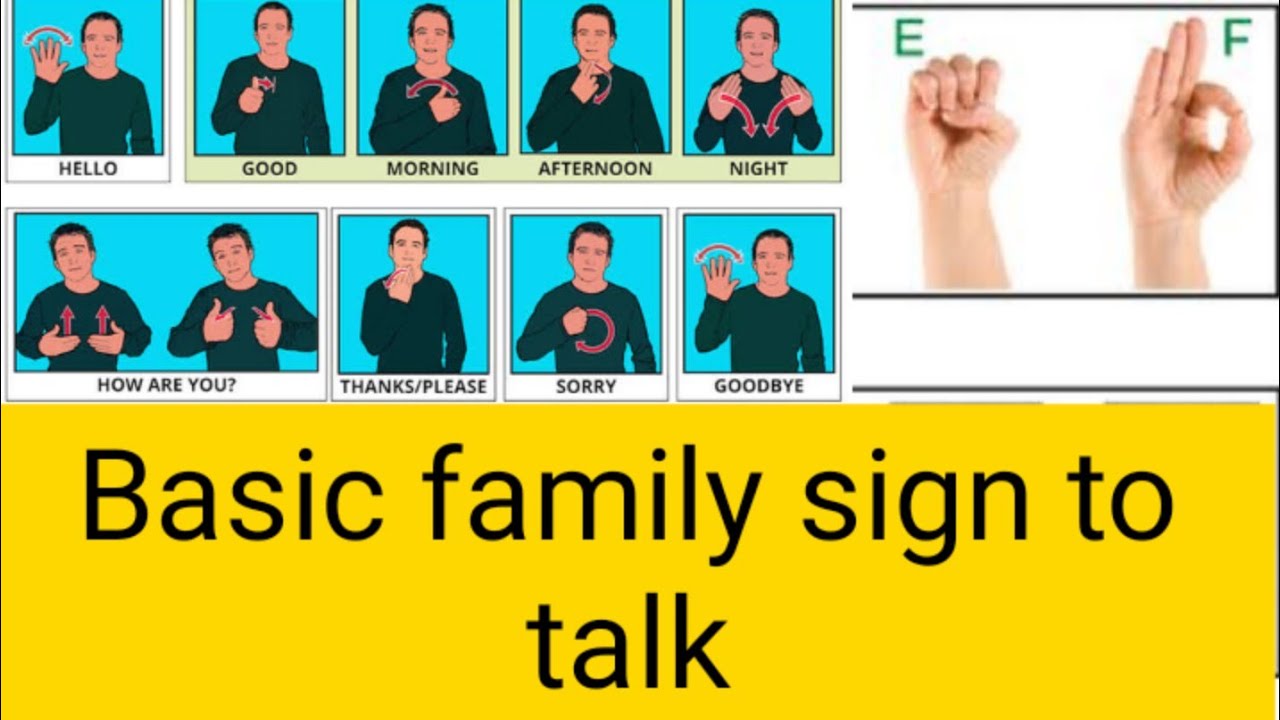
Selecting the right foundational signs is crucial for establishing effective communication within your family. These initial signs should be practical, frequently used, and easily recognizable, paving the way for more complex interactions as your family becomes more comfortable with sign language. The goal is to empower everyone, especially young children, to express their immediate needs and feelings.This section will guide you through identifying the most impactful basic signs, categorized for clarity and ease of learning.
We will focus on signs that are most relevant to everyday family life, ensuring that your efforts are met with immediate utility and engagement.
Core Signs for Introducing the Concept to Young Children
Introducing sign language to very young children requires a focus on concrete, immediate concepts. These signs are designed to align with a child’s daily experiences and developmental stage, making learning both intuitive and rewarding.Here is a curated list of essential signs perfect for initiating sign language with toddlers and preschoolers:
- More: Typically signed by tapping the fingertips of one hand to the fingertips of the other. This is vital for expressing desire for more food, drink, or playtime.
- All Done: Often signed by turning the hands outwards, palms facing down. This sign is essential for indicating completion of a meal, activity, or task.
- Eat: Mimics bringing food to the mouth with the fingertips. This sign is fundamental for meal times and expressing hunger.
- Drink: Forms a “C” shape with the hand and brings it to the mouth as if holding a cup. Crucial for indicating thirst.
- Help: Often signed by making fists with thumbs pointing up and rotating them in a circle. This sign is important for requesting assistance with tasks or during moments of difficulty.
- Please: A flat hand is rubbed in a circular motion on the chest. This sign promotes politeness and respectful interaction.
- Thank You: The fingertips of one hand touch the chin and then move forward away from the body. Another key sign for fostering gratitude.
- Yes: A nod of the head, often accompanied by a closed fist moving up and down.
- No: A shake of the head, often accompanied by the index finger and thumb coming together and apart.
Categorizing Signs for Everyday Interactions
To make learning and recall more efficient, signs can be effectively grouped into functional categories. This approach mirrors how we naturally organize language and facilitates quicker integration into daily routines. By focusing on specific areas of communication, families can build confidence and fluency systematically.The following categories and their associated signs represent the most practical and frequently used signs for everyday family interactions:
Greetings and Farewells
Establishing clear ways to greet and say goodbye is fundamental to social interaction. These signs create a sense of connection and acknowledgment.
- Hello/Hi: A salute-like gesture with an open hand moving from the forehead outward.
- Goodbye: A wave of the hand.
Expressing Needs and Wants
This category is paramount for ensuring that everyone’s basic requirements are met, reducing frustration and promoting independence.
- Hungry: Hand moves from the neck down to the stomach.
- Thirsty: Index finger moves down the throat.
- Sleep: Hands are placed together, palms facing each other, and then brought down in front of the face as if resting.
- Play: Fists are brought together and then rotated away from each other.
- Toilet/Potty: Two fists are tapped together.
- Want: Palms up, fingers slightly curled, hands move forward from the chest.
Identifying Emotions and Feelings
Understanding and expressing emotions is vital for emotional intelligence and strong family bonds. These signs help in acknowledging and validating feelings.
- Happy: Flat hands move upward on the chest.
- Sad: Index fingers move down the cheeks, mimicking tears.
- Love: Arms are crossed over the chest, as if hugging oneself.
- Mad/Angry: Two fists are brought together and then pulled apart forcefully.
- Scared: Hands are held in front of the body, palms facing each other, and shaken.
Common Objects and Actions
Incorporating signs for everyday objects and actions makes communication more specific and engaging.
- Book: Two hands are placed together, then opened and closed like a book.
- Water: The “W” handshape (three fingers extended, thumb and pinky extended) is tapped against the chin.
- Milk: Mimics milking a cow with a closed fist.
- Go: Index fingers point forward and move forward.
- Stop: A flat hand is held up, palm facing forward.
Core Signs for Introducing the Concept to Young Children
When introducing sign language to very young children, the focus should be on signs that are directly related to their immediate environment and daily routines. These signs are typically concrete, easily observable, and highly motivating for a child. The aim is to quickly provide them with tools to express their basic needs and desires, fostering a sense of agency and connection.The following set of core signs serves as an excellent starting point for families with young children, prioritizing simplicity and immediate relevance:
- More: Tapping the fingertips of one hand to the fingertips of the other hand. This is a fundamental sign for indicating a desire for continuation or an additional quantity of something.
- All Done: Turning the hands outwards with palms facing down. This sign is crucial for signaling the end of an activity, meal, or task, helping children understand transitions.
- Eat: Mimicking the action of bringing food to the mouth with the fingertips of one hand. This sign is directly tied to a primary need and daily event.
- Drink: Forming a “C” shape with the hand and bringing it to the mouth as if holding a cup. This sign addresses another essential need and is easily associated with cups and bottles.
- Help: Making fists with thumbs pointing up and rotating them in a circular motion. This sign empowers children to ask for assistance when they are struggling with something.
- Please: A flat hand is rubbed in a circular motion on the chest. This sign introduces the concept of politeness in a tangible way.
- Thank You: The fingertips of one hand touch the chin and then move forward away from the body. This sign is essential for cultivating gratitude and reciprocal communication.
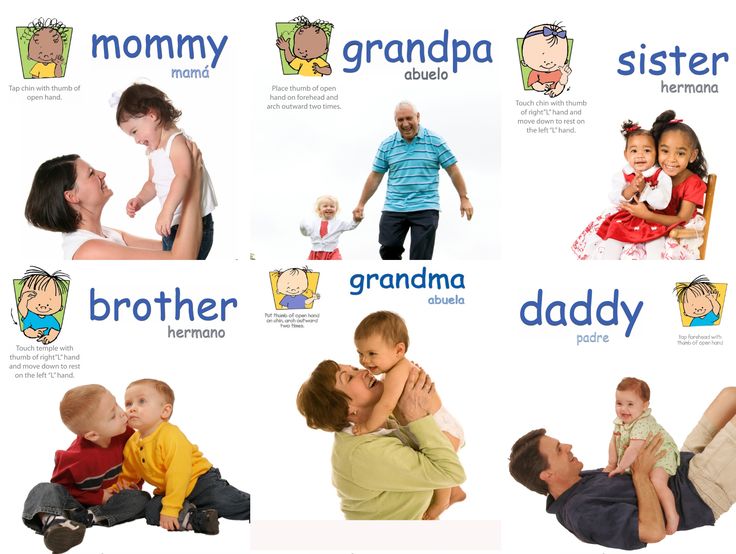
- Mom/Mama: A flat hand with the thumb extended, tapping the chin.
- Dad/Dada: A flat hand with the thumb extended, tapping the forehead.
Methods for Teaching Basic Signs Effectively
Introducing basic signs to your family can be a joyful and enriching experience, and employing effective teaching methods ensures that learning is engaging and successful for everyone involved. The key is to adapt strategies to suit the diverse learning styles and developmental stages present within a family unit, from toddlers to adults. This section explores various techniques designed to make sign language acquisition a natural and enjoyable part of daily life.The effectiveness of sign language instruction hinges on creating an environment that encourages consistent practice and reinforces learning through multiple sensory channels.
By integrating signs into everyday routines and making the process fun, families can build a strong foundation for clear and accessible communication.
Teaching Techniques for Different Age Groups
Adapting teaching methods to the specific age and developmental stage of each family member is crucial for effective sign language acquisition. Younger children often learn best through play and imitation, while older children and adults may benefit from more structured approaches combined with practical application.
- For Toddlers and Preschoolers (Ages 1-5): This age group thrives on repetition, visual stimulation, and interactive learning. Focus on a small vocabulary of high-frequency signs relevant to their daily activities and interests. Make learning a game, using songs, stories, and playful interactions. For instance, when giving a snack, sign “more” repeatedly while offering it.
- For School-Aged Children (Ages 6-12): Children in this age range can engage with more structured learning. Introduce signs through themed vocabulary sets (e.g., animals, colors, feelings) and use flashcards or drawing activities to reinforce recognition. They can also begin to understand the connection between spoken words and their corresponding signs more explicitly.
- For Teenagers and Adults: This group can benefit from a combination of direct instruction, practical application, and understanding the linguistic aspects of sign language. They may appreciate learning about the grammar and structure of sign language, and can actively participate in conversations using signs.
Repetition and Visual Aids for Sign Learning
Consistent exposure and the use of visual cues are fundamental to mastering new signs. Repetition helps to embed the motor memory for the signs, while visual aids provide a concrete reference point, aiding comprehension and recall.
Repetition can be integrated seamlessly into daily routines. For example, when preparing meals, consistently sign “eat” and “drink” with each action. When interacting with a pet, use the sign for the animal’s name. The more frequently a sign is encountered in a meaningful context, the quicker it will be learned.
Visual aids enhance the learning process by making abstract concepts tangible. These can include:
- Flashcards: Create or purchase flashcards with a picture of the object or action on one side and the sign on the other. This is excellent for vocabulary building and self-testing.
- Books and Videos: Utilize children’s books that incorporate sign language or watch educational videos demonstrating signs. The visual representation of the sign being performed alongside the spoken word or image is highly effective.
- Real-life Objects: Point to actual objects while performing the corresponding sign. For instance, hold up an apple and sign “apple” to connect the visual object directly with the sign.
- Diagrams and Illustrations: For more complex signs, diagrams that break down the handshape, location, and movement can be very helpful, particularly for older learners.
“Repetition is the mother of learning.”
Latin Proverb
Effectiveness of Games Versus Direct Instruction
Both games and direct instruction play vital roles in sign language acquisition, each offering unique advantages. The most effective approach often involves a blend of both, tailored to the learners’ preferences and the specific signs being taught.
Direct instruction provides a clear and focused introduction to signs. This method involves explicitly showing the sign, explaining its meaning, and demonstrating the correct handshape, location, and movement. It is particularly useful for introducing new vocabulary and ensuring accuracy from the outset. For instance, a parent might sit with a child and demonstrate the sign for “thank you,” repeating it several times and explaining its importance.
Games, on the other hand, transform learning into an enjoyable activity, fostering engagement and retention. They leverage natural motivation and can make practice feel less like work. Games are excellent for reinforcing learned signs and building fluency.
Here’s a comparison:
| Method | Advantages | Disadvantages | Best For |
|---|---|---|---|
| Direct Instruction | Ensures accuracy, clear introduction of new signs, good for explaining meaning and nuances. | Can be less engaging for very young children if not interspersed with activities, may feel like formal schooling. | Introducing new signs, teaching complex signs, ensuring correct formation. |
| Games | Highly engaging, promotes repetition naturally, builds fluency and confidence, makes learning fun. | May not always ensure perfect accuracy without occasional correction, might require more preparation of materials. | Reinforcing learned signs, practicing vocabulary, developing conversational skills, keeping young learners motivated. |
For example, a game like “Simon Says” can be adapted to use signs. If the instruction is “Simon says sign ‘happy’,” participants would perform the sign for happy. Another effective game is “Sign Charades,” where one person signs a word and others guess, or vice versa. These playful activities encourage active participation and make the recall of signs more spontaneous and enjoyable.
Creating a Supportive Learning Environment at Home

Establishing a positive and encouraging atmosphere is paramount to the success of teaching basic signs to your family. This environment fosters a sense of shared accomplishment and makes the learning process enjoyable for everyone involved, from the youngest child to the adults. When learning is integrated seamlessly into daily life and presented as a fun activity, retention and consistent usage naturally increase.A supportive learning environment is characterized by patience, positive reinforcement, and a genuine commitment to communication.
It’s about creating opportunities for practice without pressure, celebrating small victories, and ensuring that sign language becomes a natural extension of your family’s communication toolkit. This approach not only facilitates the acquisition of signs but also strengthens family bonds through shared learning and understanding.
Integrating Sign Practice into Daily Routines
Incorporating sign language practice into everyday activities transforms learning from a separate task into an organic part of family life. This consistent exposure ensures that signs are used in context, making them more memorable and practical. By weaving sign practice into established routines, you create natural opportunities for repetition and reinforcement, making the learning process feel effortless and effective.Consider the following plan for integrating sign practice into your daily schedule:
- Morning Routine: Practice signs related to waking up, getting dressed, and breakfast. For instance, sign “good morning,” “eat,” “drink,” “clothes,” and “wash.” This can be done while you are preparing breakfast or helping children get ready.
- Meal Times: Use meal times to practice signs for food items, “more,” “all done,” and “thank you.” Pointing to the food while signing reinforces the connection between the word and the gesture.
- Playtime: Integrate signs into games and activities. When playing with toys, sign “play,” “ball,” “car,” “doll,” and action verbs like “run,” “jump,” and “throw.”
- Outings: Practice signs for places you visit, such as “park,” “store,” “car,” and “walk.” Signs related to greetings like “hello” and “goodbye” are also essential during transitions.
- Bedtime Routine: Use signs like “sleep,” “book,” “story,” “hug,” and “goodnight” to create a calming and communicative end to the day.
This structured yet flexible approach ensures that sign language becomes a natural and integral part of your family’s daily interactions, fostering consistent practice and deeper understanding.
Strategies for Making Sign Learning Fun and Engaging
To ensure that learning basic signs is an enjoyable experience for all family members, it is crucial to employ creative and engaging strategies. When learning is associated with positive emotions and interactive activities, it becomes more effective and sustainable. These methods aim to capture the attention of children and adults alike, transforming practice sessions into moments of shared joy and connection.Here are several strategies to make sign learning fun and engaging:
- Use Visual Aids: Create flashcards with pictures and corresponding signs. You can also use colorful posters or charts around the house. Videos and online resources demonstrating signs can also be highly beneficial.
- Incorporate Songs and Rhymes: Many children’s songs can be adapted to include signs. Singing songs while performing the signs together makes the learning process musical and memorable.
- Play Games: Develop sign language games such as “Simon Says” (using signs), charades with signs, or a “sign scavenger hunt” where family members find objects and sign their names.
- Storytelling: Read books and tell stories, incorporating signs for key words or characters. This contextualizes the signs and makes them more meaningful.
- Role-Playing: Encourage family members to act out scenarios using signs. This could involve pretending to be at a restaurant, a doctor’s office, or a playground.
- Reward System: Implement a simple reward system, such as sticker charts or small privileges, for consistent practice or mastering new signs. Ensure rewards are motivating and appropriate for all age groups.
By making sign learning a playful and interactive endeavor, you foster enthusiasm and a positive attitude towards communication within your family.
Encouraging Consistent Use of Learned Signs
Sustaining the use of learned signs requires a conscious effort to integrate them into everyday communication and to provide ongoing positive reinforcement. Consistency is key to moving beyond a novelty and establishing sign language as a functional and habitual part of your family’s interactions. This involves creating an environment where using signs is not only encouraged but also seen as a valuable and natural way to connect.The following approaches can help encourage the consistent use of learned signs:
- Lead by Example: Adults in the family should consistently use the signs they know. Children are more likely to adopt behaviors they see modeled by their parents and caregivers.
- Positive Reinforcement: Offer praise and encouragement whenever a family member uses a learned sign correctly. A simple smile, a nod, or a verbal compliment can go a long way.
- Respond to Signs: When a family member (especially a child) uses a sign, respond to it immediately and appropriately. This shows that their communication is understood and valued.
- Create “Sign-Only” Moments: Designate specific times or activities where only sign language is used. This could be during a meal, a short play session, or while watching a specific show.
- Review and Revisit: Periodically review learned signs, perhaps once a week, through games or quick practice sessions. This helps refresh memory and reinforce the learning.
- Introduce New Signs Gradually: As the family becomes comfortable with a set of signs, gradually introduce new ones. This keeps the learning process dynamic and prevents overwhelm.
- Make it a Family Goal: Frame the learning and use of sign language as a collective family endeavor. Discuss progress and celebrate milestones together.
“Consistency in practice and positive reinforcement are the cornerstones of successful language acquisition, whether spoken or signed.”
By actively fostering an environment where signs are regularly used and appreciated, you ensure that this valuable communication skill becomes deeply embedded within your family’s dynamics.
Visualizing and Describing Key Signs for Family Communication
Understanding the physical execution of basic signs is crucial for effective communication. This section will guide you through the visual and descriptive elements of several fundamental signs, enabling you to accurately demonstrate them to your family. By focusing on the handshape, location, and movement, you can build a strong foundation for your family’s sign language journey.Learning these signs is like learning a new language; the more clearly you can articulate them, the easier it will be for others to grasp.
We will break down each sign into its core components, making it simple to visualize and practice.
The Sign for “Hello”
The sign for “hello” is a universally recognized greeting in sign language. It is a friendly and approachable sign that sets a positive tone for interaction.To form the sign “hello”:
- Handshape: Begin with your dominant hand in a flat “B” shape, meaning your fingers are together and straight, and your thumb is extended slightly away from your palm.
- Location: Bring your hand up to your forehead, with your fingertips touching your temple.
- Movement: Move your hand outward and slightly forward, away from your forehead, in a small, gentle arc. This movement is similar to a salute.
The Sign for “More”
The sign for “more” is essential for expressing desire, requesting additional items, or indicating a continuation of an action. It is a simple yet powerful sign.To form the sign “more”:
- Handshape: Form both hands into a “C” shape, with your fingers curved and your thumb extended.
- Location: Bring your fingertips of both hands together, so they touch.
- Movement: Repeatedly tap the fingertips of your dominant hand against the fingertips of your non-dominant hand. The movement should be a gentle tapping motion, indicating the concept of addition or repetition.
The Sign for “Thank You”
Expressing gratitude is fundamental in any relationship, and the sign for “thank you” is a beautiful way to convey appreciation within your family.To form the sign “thank you”:
- Handshape: Form your dominant hand into a flat “B” shape, with your fingers together and straight, and your thumb extended.
- Location: Bring your fingertips to your chin.
- Movement: Move your hand forward and slightly down, away from your chin, in a smooth, sweeping motion. This gesture signifies sending your gratitude outward.
The Sign for “Eat”
The sign for “eat” is a practical and frequently used sign that facilitates communication around meal times and food-related activities.To form the sign “eat”:
- Handshape: Form your dominant hand into a “C” shape, with your fingers curved and your thumb extended.
- Location: Bring your hand up to your mouth, with the opening of the “C” facing your lips.
- Movement: Move your hand towards your mouth as if you are bringing food to it. The movement is a gentle, repeated motion of bringing the “food” (represented by your hand) to your mouth.
Practical Scenarios for Using Learned Signs
Integrating basic signs into your family’s daily routines can transform communication, making it more accessible, engaging, and efficient. These signs act as bridges, especially during moments when verbal communication might be challenging or when reinforcing understanding. By weaving signs into everyday activities, you create a natural learning environment where everyone, from the youngest child to adults, can participate and benefit.This section explores various everyday situations where the learned signs can be practically applied, fostering a more connected and communicative family dynamic.
We will look at how signs can enhance shared experiences during meals, playtime, and when expressing emotions.
Incorporating Signs During Meal Times
Mealtimes are ideal opportunities to practice and reinforce learned signs. The consistent presence of food and the predictable sequence of activities provide a natural context for sign language. Using signs during meals not only helps children learn but also makes the experience more inclusive for those who may have communication delays or difficulties.Here are some ways to integrate signs during meal times:
- Requesting Food: Encourage your child to sign “eat,” “drink,” “more,” or specific food names like “milk,” “apple,” or “bread.” For example, when serving a meal, you can point to the food and ask, “Do you want more chicken?” while demonstrating the sign for “more.”
- Expressing Preferences: Children can use signs to indicate if they like a particular food or if they are full. Signs like “yes,” “no,” “like,” and “finished” are essential here. If a child enjoys their meal, they can sign “like” while pointing to the food.
- Identifying Foods: As you prepare or serve food, name the items and demonstrate their corresponding signs. This reinforces vocabulary and helps children associate the sign with the object.
- Actions Related to Eating: Signs for “wash hands,” “spoon,” “fork,” and “plate” can be used during the preparation and clean-up phases of mealtime.
Using Signs During Playtime
Playtime is a child’s primary mode of learning and exploration, and incorporating signs into these activities can significantly enhance their cognitive and social development. Signs can help children express their desires, needs, and observations during play, making their interactions more meaningful.Examples of using signs during playtime include:
- Expressing Playful Actions: Use signs for actions like “play,” “ball,” “doll,” “car,” “read,” and “sing.” If a child wants to play with a specific toy, they can point to it and sign its name.
- Taking Turns: Signs like “my turn” and “your turn” can be incredibly helpful in managing shared play and teaching patience.
- Describing Play: Encourage children to use signs to describe what they are doing, such as “build,” “draw,” or “run.” This helps them articulate their imaginative play.
- Sharing and Offering: Signs like “share” and “give” can facilitate cooperative play and teach important social skills.
Employing Signs to Express Feelings
Understanding and expressing emotions is a crucial aspect of emotional intelligence. Basic signs for feelings provide a vital tool for children to communicate their inner states, helping them to process and manage their emotions effectively. This is particularly beneficial for very young children or those who struggle with verbalizing their feelings.Here are examples of using signs to express feelings:
- Happy: The sign for “happy” typically involves bringing your hands, palms facing you, to your chest and moving them outwards in a cheerful motion. You can use this sign when your child is smiling, laughing, or enjoying an activity, saying, “You look happy!”
- Sad: The sign for “sad” can be demonstrated by bringing your hands, palms facing down, from your forehead down your cheeks, mimicking tears. When a child is crying or looking downcast, you can gently ask, “Are you sad?” and offer a comforting hug.
- Angry: The sign for “angry” often involves making fists and bringing them down forcefully, or pointing your index fingers towards each other and moving them apart with tension. When a child is frustrated or upset, you can say, “I see you’re feeling angry,” helping them to label their emotion.
- Tired: The sign for “tired” usually involves resting your head on your hands, as if sleeping. When a child is yawning or rubbing their eyes, you can sign “tired” and suggest it might be time for a nap or rest.
- Scared: The sign for “scared” can be shown by holding your hands out, palms facing outwards, and shaking them slightly. When a child seems apprehensive about something, you can sign “scared” and ask what is bothering them.
By consistently modeling and encouraging the use of these feeling signs, you empower your family members to communicate their emotional well-being more clearly, fostering empathy and understanding within the household.
Resources and Tools to Aid Sign Learning
Embarking on the journey of teaching your family basic signs is a rewarding endeavor, and thankfully, a wealth of resources and tools are available to support your efforts. These aids can transform the learning process from a potential challenge into an engaging and accessible family activity. By leveraging these resources, you can enhance understanding, reinforce learning, and ensure consistent practice for all family members.The key to successful sign language acquisition lies in consistent exposure and varied learning methods.
Utilizing a combination of visual aids, interactive platforms, and community support can significantly accelerate progress and foster a deeper connection within your family.
Printed and Digital Learning Materials
A variety of excellent books and online platforms are designed to introduce basic sign language. These resources often provide clear illustrations, step-by-step instructions, and helpful context for each sign, making them ideal for families learning together.Here are some types of materials that can be beneficial:
- Children’s Sign Language Books: Many beautifully illustrated books focus on basic signs relevant to early childhood communication, such as “please,” “thank you,” “more,” and names of common objects and emotions.
- Comprehensive Sign Language Dictionaries: For a broader vocabulary, consider bilingual dictionaries or those specifically for American Sign Language (ASL) or British Sign Language (BSL), depending on your region. These often include detailed descriptions and photographic representations of signs.
- Online Video Platforms: Websites and apps dedicated to sign language learning offer video demonstrations of signs, allowing you to see the nuances of handshape, movement, and facial expression. Many of these are free and accessible on demand.
- Interactive Learning Apps: Gamified apps can make learning fun and engaging for both children and adults, often incorporating quizzes and progress tracking to motivate continued practice.
Creating Personal Visual Aids
Developing your own custom learning materials can significantly enhance memorization and tailor the learning experience to your family’s specific needs and interests. These personalized tools make the signs more relevant and memorable.To create effective personal visual aids:
- Flashcards: Design flashcards with a picture or drawing of the sign on one side and the written word on the other. You can also include a brief description of the handshape and movement. Laminating these cards will increase their durability for repeated use.
- Personalized Visual Dictionary: Compile a binder or digital document with printed images or hand-drawn illustrations of the signs your family is learning. Organize these by category (e.g., food, feelings, actions) for easy reference.
- “Sign of the Day” Chart: Dedicate a visible space, like a refrigerator or family bulletin board, to display a new sign each day or week. This constant visual reminder encourages regular engagement and practice.
Community and Local Support
Connecting with others who are learning or fluent in sign language can provide invaluable support, motivation, and opportunities for real-world practice. Local communities often offer resources that complement home-based learning.Ways to find local support include:
- Deaf Community Centers: Many cities have centers that serve the Deaf community and may offer introductory sign language classes or social events where you can meet signers.
- Community Colleges and Adult Education Programs: These institutions frequently offer sign language courses at various levels, from beginner to advanced.
- Libraries: Local libraries often have sign language books and DVDs available for checkout, and some may even host workshops or story times featuring sign language.
- Online Local Groups: Search social media platforms or community forums for local groups dedicated to sign language learning or the Deaf community. These groups can be a great way to find study partners or information about local events.
End of Discussion
Embarking on the journey of teaching your family basic signs is an investment in stronger relationships and more profound communication. By integrating these simple yet powerful tools into your daily routines, you open up new avenues for understanding, connection, and shared joy. This guide has equipped you with the knowledge and practical strategies to make sign language learning a vibrant and enriching part of your family’s life, creating lasting memories and a more connected household.